

Known in Spain as La Residencia, The House That Screamed from 1969 is another Psycho-inspired horror movie. With each iteration on the psychological thriller’s base formula, more extreme themes and gore are introduced, pushing movies like Dementia 13 and The House that Screamed away from thrillers and mysteries, and more solidly into horror. The themes of abuse of power, control and isolation that are presented in The House that Screamed may have been inspired by other films but are given new dimensions in this twisted tale.
- Narciso Ibáñez Serrador
- Narciso Ibáñez Serrador Juan Tébar
- Lilli Palmer. Cristina Galbó. John Moulder-Brown
Box Office Impact
While The House that Screamed was a box office success, critical reception was, at best, mixed. Some of the critics were so offended by the movie they found it to be disrespectful to film as a whole. Director Juan Piquer Simon lists it as one of his inspirations for the 1982 cult classic horror film Pieces. Fun fact: Pieces is one of the UK’s infamous “video nasties”, and was confiscated during that period.
Review and Recap – Spoilers Ahead
The opening is full of peaceful music and pastoral landscapes. It’s a dreamy opening, but also a slightly ominous one, and sets an appropriate mood for what’s to come. The House That Screamed takes place in such a remote location and it’s so removed from other people that it’s easy to forget it’s a period piece. It makes it timeless.
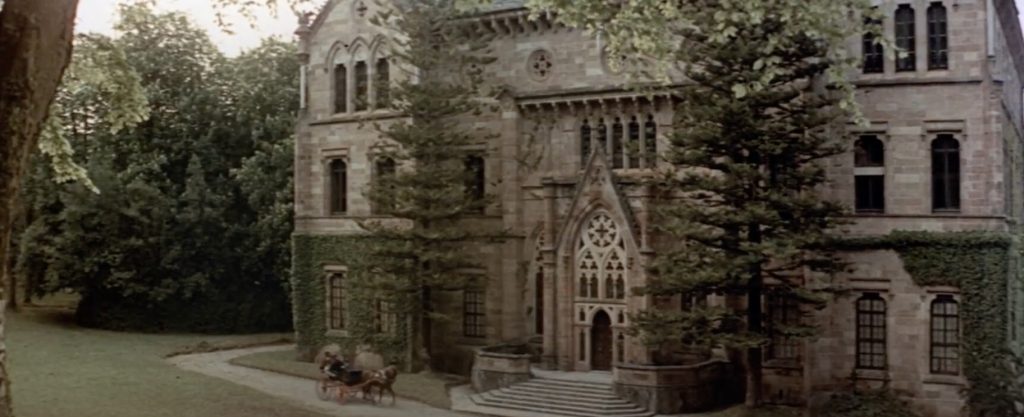
A new girl, Teresa, is arriving at a 19th-century boarding school. Here, we get the first sign that this is not a typical school: the gates are locked behind the new arrival. The headmistress, Fourneau, is strict, and some of the girls have issues with authority. A disobedient girl is sent to the seclusion room. This is a room that only the headmistress has a key to for some reason, using solitary confinement as a punishment
Fourneau is friendly with the new arrival, a contrast to her in classroom attitude. Teresa notices that they are being followed during their tour. After a few rooms, the headmistress realizes it too. Teresa’s guardian pays for two terms in advance. Afterward, the headmaster tells him that the girls are difficult and to lead them to the right path, she must use a firm hand.
After a very quiet dinner, the girls excitedly greet the new arrival. They play with her clothes enviously, but not cruelly, and tell her of the reality of the school.
Abuse of Power
In the seclusion room, the headmistress confronts the disobedient girl. She is completely unrepentant, even when the headmistress has other students participate in her punishment. The other students enjoy their position of power over the disobedient girl, especially the one who gets to whip her.
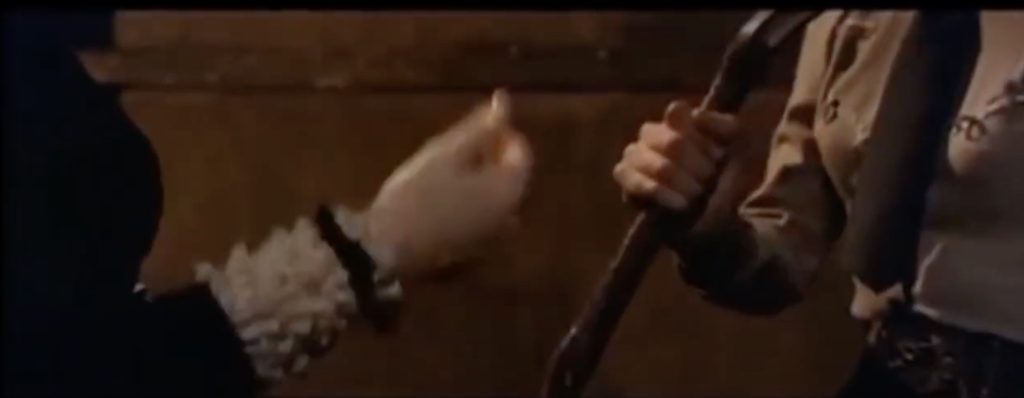
After, the headmistress confronts a young man, asking him why he followed them, and forbidding him from spying on the girls. This is her son, Luis. She tells him none of these girls are worthy of him, and he needs a girl like her to take care of him. This is not a healthy relationship.
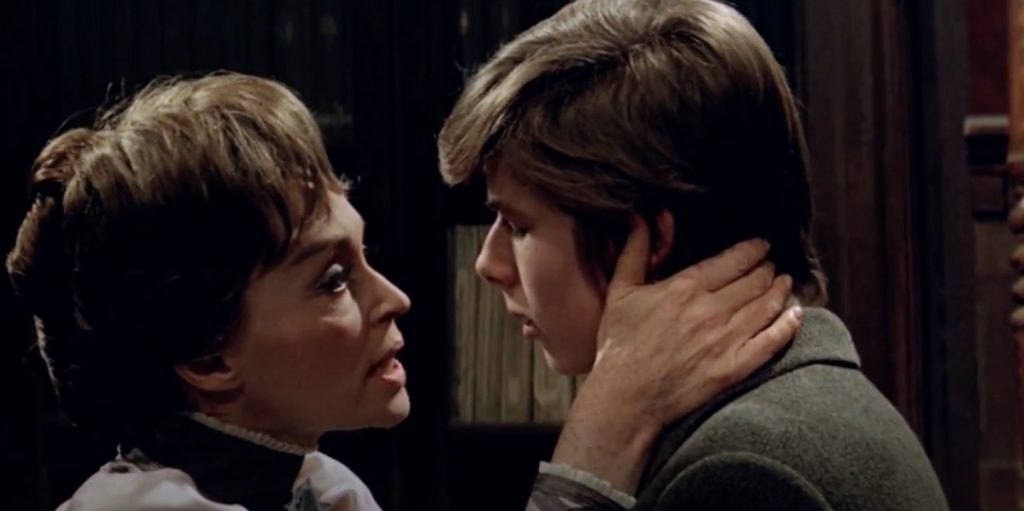
The next morning, Teresa and another girl make the beds while the girl fills Teresa in on the gossip about boys and Luis. Apparently Isabelle, another girl, has a crush on him and slips out to meet him from time to time.
Luis and Isabelle meet up and talk about leaving together. It’s all very forbidden romance and young love.
Teresa meets with Irene, the Headmistress’s head student lackey. She’s on a massive power trip. She blackmails the other girls with privileges and threats. Teresa seems mostly unphased by this.
The First Death
Isabelle finds keys and a note in her bed from Luis, telling her how to use them. Isabelle sneaks out to meet Luis. While she is waiting for him in the garden someone unseen murders her.

The next morning, Fourneau rages when Isabelle is found missing. She makes plans to turn the school into even more of a prison. Luis spies on the girls while they shower, even though they shower in long nightgowns. After becoming trapped in a crawl space in the walls he manages to alert Teresa for help. They start meeting, which earns her the ire of Irene and her lackies.
One of the “perks” of obeying Irene is a monthly rendezvous with Henry, a man from the local village who delivers firewood. Whoever Irene favors the most gets to spend some quality time with him, something the boy-starved students are only too happy to jump through hoops for.
Luis comes in from reading in the garden. His mother immediately berates him for being sickly and spending too much time outside. She tells him she knows he’s meeting one of the girls, and makes him promise not to see her anymore.
Irene is the Worst
Irene bullies Teresa when she finds out that her mother is a cabaret singer, forcing her to sing until she breaks down. This is a harder scene to watch than any of the kills. Rooted in real life bullying and cruelty, Irene is a convincing and realistic villain.
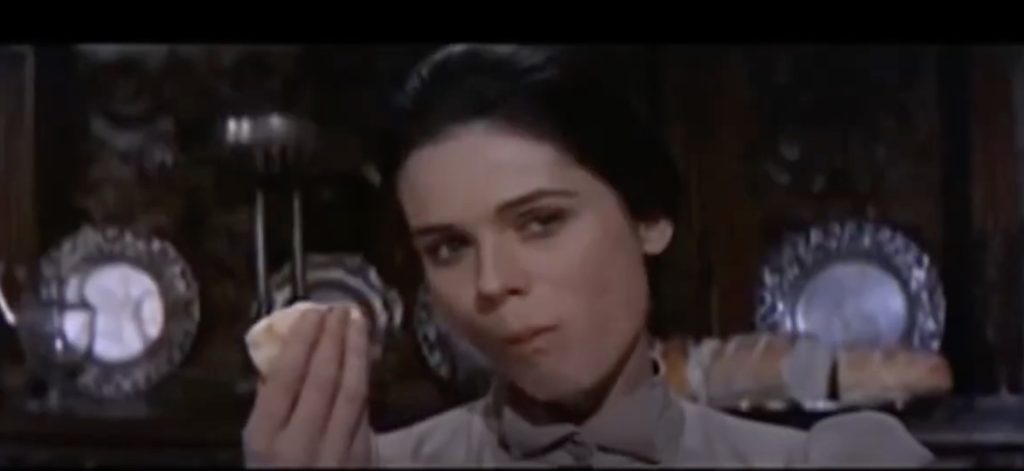
That night, Teresa attempts escape; Irene wakes up and rushes to the front to stop her. Teresa stops to say goodbye to Luis. He gives her some money and advice for getting out. As she tries to open a window in the dining room, a figure attacks her from behind slitting her throat.
Irene Alone
Irene investigates outside the house to discover Teresa’s belongings and the open window. She has no choice but to tell the headmistress of her escape. Irene knows Teresa didn’t escape, but the headmistress doesn’t believe her. Irene threatens the headmistress with her knowledge of the abuses occurring at the school. The headmistress forces her to turn over her keys.
The headmistress, visibly rattled by everything, even chooses not to punish openly defiant students when she normally would. That night after bed time, she asks to meet with Irene. The student choses to try to escape rather than meet with her. When the headmistress catches her, she flees.
The Killer Revealed
The headmistress follows her up to the attic. She discovers Irene dead with her hands cut off. She searches the attic and finds Luis. He’s created his perfect girl, just like mother, made from the body parts of all the missing students. A happily smiling Luis locks his mother in the room with the girl, telling her to talk to her. He sits outside smiling and waiting for his perfect girl, just like mother promised.
How Is It a Slasher:
The House that Screamed separates itself from many slashers by taking the elements and twisting them. The biggest is doing away with the most tried and true of the genre conventions: the final girl. What starts to look like a last-minute switch-in leads is a red herring as Irene doesn’t make it either. The Norman Bates-inspired Luis finishes his perfect franken-girl, and even brings her to meet mother.
Traumatic Background
The other interesting element is that we are watching the killer live his trauma. Every moment he spends with his mother, the headmistress, she reinforces the emotional incest that created the monster that he is. We start the movie with him already having killed several girls.
The isolation of the house is ideal for the setting. It’s basically a prison, as the staff chains the gates and locks the doors behind the girls, even before the “escapes” start. The lack of men, except for one handyman, does more than make the girls stir crazy. In 1969, for a period film, it makes the point that for these women, there’s no one to save them.
Stalking
Stalking is what Luis does best. He spends most of his time watching the girls. Sometimes it’s overt, and sometimes he hides in shadows, enhancing the feeling of dread that permeated The House That Screamed. Although this is Luis house, there is a clear divide between Luis territory and the girls. He frequently breaks that boundary, following them, and watching from the shadows. So much so that his mother repeated forbids it, reminding him that none of the girls are any good.
The deaths are few and far between; the focus is on mood and atmosphere. These kills are stylistically done, going for tension over blood and gore. These are functional kills, because the death is a means to an end.
Themes
Corruption and control are major themes in The House that Screamed. The headmistress Fourneau corrupted her son, even as she claims to be putting wayward girls on the straight and narrow. She also participated in the corruption of Irene. While we don’t know much about who this particular student was prior to coming to the boarding house, her dialogue makes it clear that some of her cruelty was learned from, or at least perfected by, the headmistress.
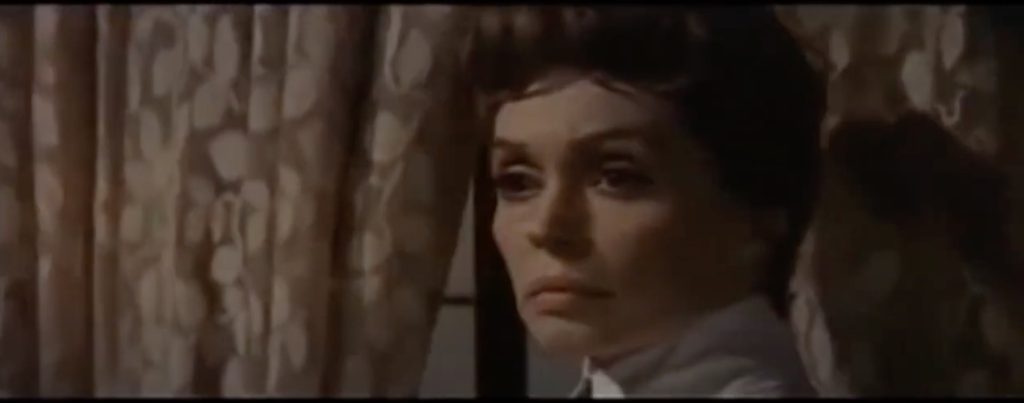
The most disobedient student is the safest. She’s never on Luis’s radar, and although she suffers Fourneau’s wrath and Irene’s need for power, her last scene in the movie shows her still disobeying the strict rules of the school. She’s unbroken by any punishment or threat. So, life lesson: disobeying unjust rules keeps you safe from dangerous mama’s boys.
Final Thoughts
Even though it’s an early entry in the subgenre, The House that Screamed has already started to twist expectations by building off it’s inspirations. It delivered a moody well acted thriller with a shocking ending that sticks with the viewer. Over the next five years, the slasher template will become more ingrained in the public conscious. This is the start of creating expectations that need to be filled, then subverted. Before we enter the golden age of slashers, there’s one last movie to review; next time, we talk about Bava’s Bay of Blood.
The House that Screamed is available on blu ray and on streaming
Read more classic slasher reviews here:
Leave a Reply