
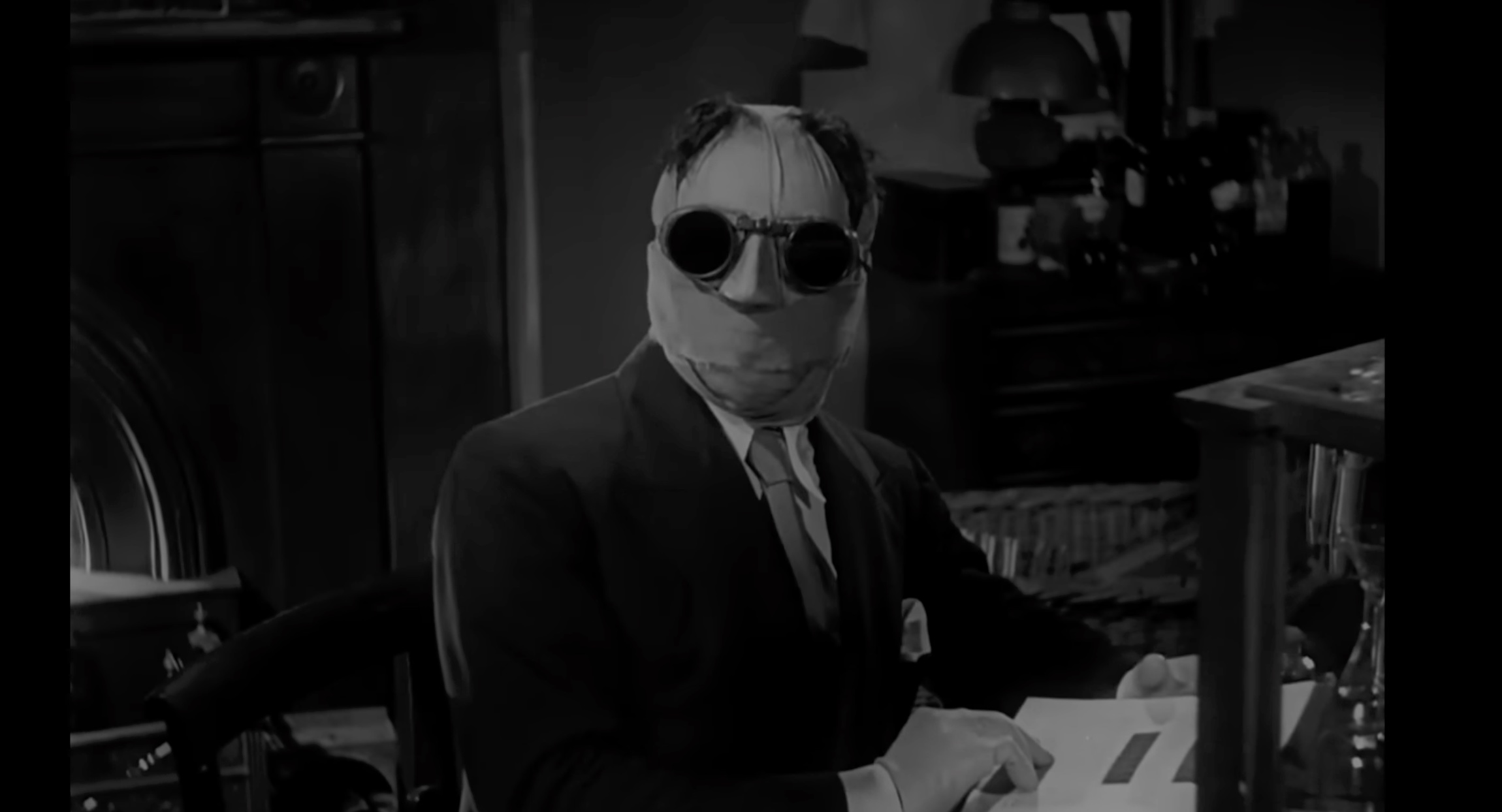
The Invisible Man is another classic creature feature that starts with science gone wrong. What it’s really about is identity and perception. Early on, a police officer says it most plainly: “He’s invisible, that’s what’s the matter with him”. There’s a lot to unpack in that line, and The Invisible Man covers so much of what that really means.
- Directed by: James Whale
- Written by: H.G. Wells. R.C. Sherriff
- Starring: Claude Rains. Gloria Stuart. William Harrigan
The Invisible Man is a showcase of practical effects. The remastered modern prints make some of the tricks obvious. None of that erases what they accomplished. The effects pale in comparison to the narrative and thematic accomplishments.
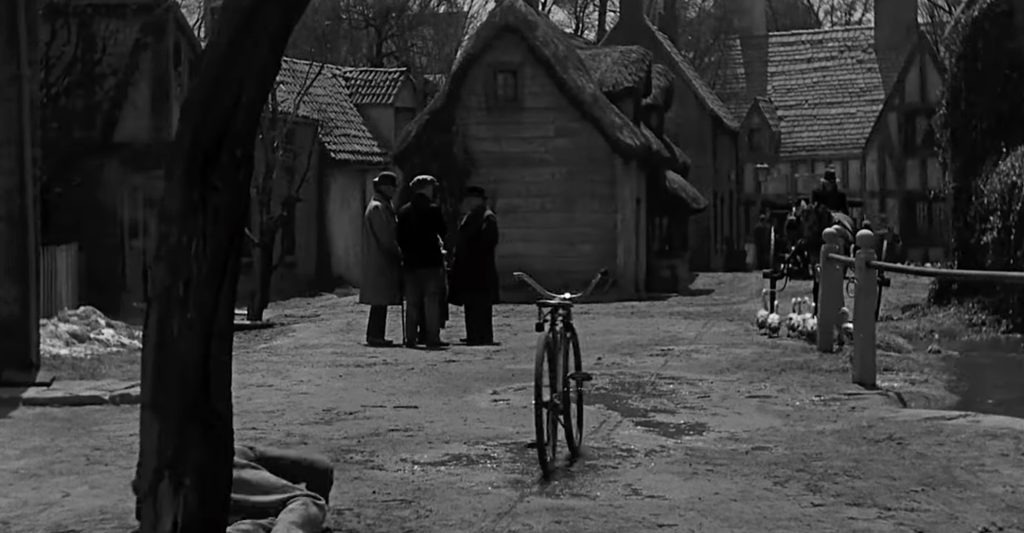
Most of the plot of The Invisible Man revolves around the scientist, Griffin, first trying to create an antidote, then reveling in his madness and trying to display his power as an unstoppable, unseen force.
He’s most offended by being called a hoax. It makes sense, having his physical body erased and then his existence questioned. While the movie gives a scientific reason for his madness, one of the chemicals Griffin uses in his invisibility drug, it’s clear that it’s not the sole cause of his madness. Too much time is spent on his reaction to his condition.
There is a fascinating contrasting set of scenes where the townspeople are preparing to hunt for the Griffin, grabbing weapons and barring doors. While they panic, Griffin sleeps. He’s secure in his power and ability.
About Flora
Every classic scientist needs a devoted fragile girl to dote on him. They are their weakness and motivation. So, Griffin has Flora. As far as mad scientist girlfriends go, she’s a bit sturdier than most. She knows he’s mad and goes to confront him anyway. Flora doesn’t have the largest role, but she helps to show the lingering humanity in Griffin.
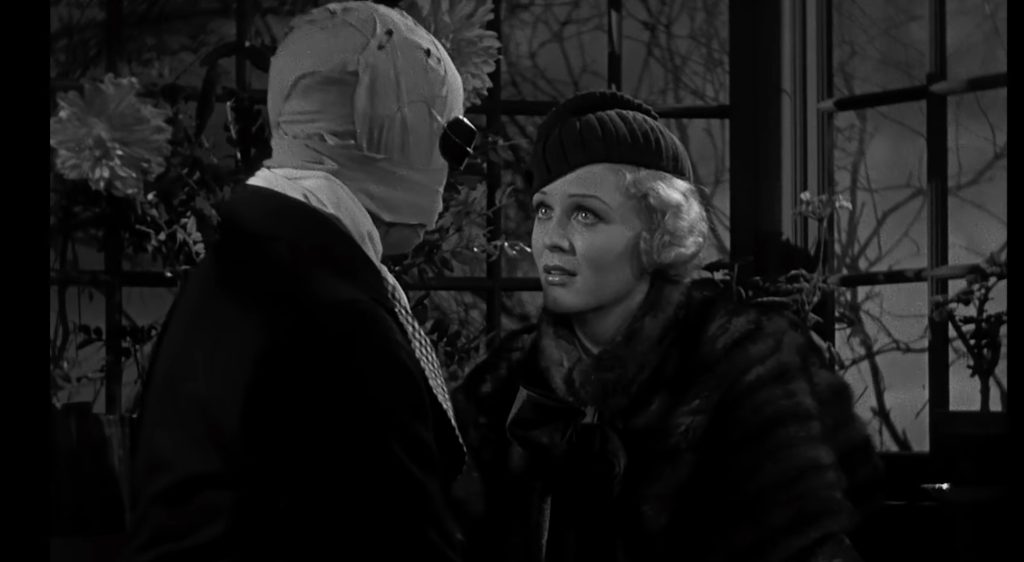
That humanity is stripped away by his betrayal by Kemp, his “visible” partner, and Griffin embraces his madness. His crime spree includes individual murders, thefts, and a train derailment. The scale of his murders does make Flora’s continuing concern for him seem a bit misplaced.
Identity from Perception
Setting aside the madness caused by the drug, let’s get into madness from loss of identity. It’s a much more relevant topic, especially given the end of the movie. Griffin admits he messed up to Flora on his deathbed. Under her loving gaze, he dies but becomes visible again, becoming the man she always saw, not the monster.
Griffin doesn’t start the movie as a gibbering loon, although he gets there. The people’s fear of him feeds his madness. They see him as a monster, and he becomes more monstrous. Except with Flora. Because he cannot see himself, he exists only as a reflection of other people’s perception of him.
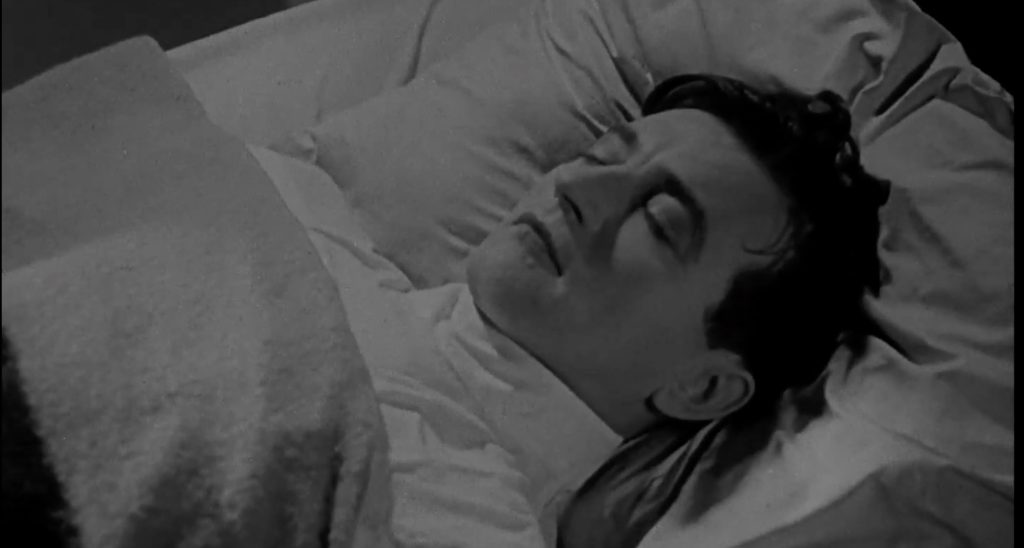
But let’s be honest, even for those of us with a reflection, it’s hard to separate who we are from what people project on us. The Invisible Man has been redone, and persists as a classic because of what it asks about identity. Not just the obvious, which is how quickly anyone would exploit the ability to be unseen. It also asks why we need to be seen, to be validated.
If Griffin had gone to Flora first, how would his story have unraveled? After all, the true inciting incident here, isn’t his becoming invisible, it’s the innkeeper treating him like a menace. Had they shown him more compassion, deserved or not, 120 people may have lived. I’m not putting those deaths on anyone but Griffin I’m just noting that when people are treated like monsters, they tend to act like monsters.
Growing Paranoia
While Griffin’s big crimes are horrifying, even more so is the idea that he could be in any room at any time. All the planning to catch him is tainted by the idea that he could be listening in. He’s the perfect spy.
Griffin exploits this paranoia to grow fear about him. By the time he makes his move, he’s got the police so wound up they’re jumping at shadows. They over-plan and miss the obvious, leading to Kemp’s death.
Kemp is interesting to me. He’s set up to be a romantic rival, vying for Flora’s affection from the beginning. He’s also clearly not a brave man. There’s nothing overtly wrong with him, he’s just not a leading man. Kemp never stands up to Griffin and then runs to everyone else for help at the first opportunity. He dies fairly horribly when he gets caught running away after betraying Griffin. Since his perception of Griffin is the worst, it makes sense that he would punish him the most.
The Humor
For a movie with a fairly high death toll, The Invisible Man is rather funny. It’s a dark humor, coming from Griffin’s antics and some rather clever dialogue. It helps balance the tragedy of Griffin’s madness.
Final Thoughts
The Invisible Man is underrated. Despite multiple remakes and reboots, including a devastatingly awesome one staring Elizabeth Moss, the original still gets a little buried in the Classic Monsters line-up. It’s a classic for a reason, and well worth your time. It’s a fast watch due to the effects and humor.
The Invisible Man is usually available on streaming.
Leave a Reply