

Released in 1932, Thirteen Women will be the oldest film I cover on here, at least for a while. Based on a best-selling novel written by Tiffany Thayer, this pre-Hayes Code film is a violent tale of revenge, racism, and female fury.
- Directed By: George Archainbaud
- Written By: Bartlett Cormack, Samuel Ornitz
- Starring: Myrna Loy, Irene Dunne
I’ve made no secret over my love of all kinds of slashers. It’s a broad subgenre that gives creators room to tell a wide variety of stories rooted in one of our most primal fears: an unstoppable killer that cannot be reasoned with.
History of a Subgenre
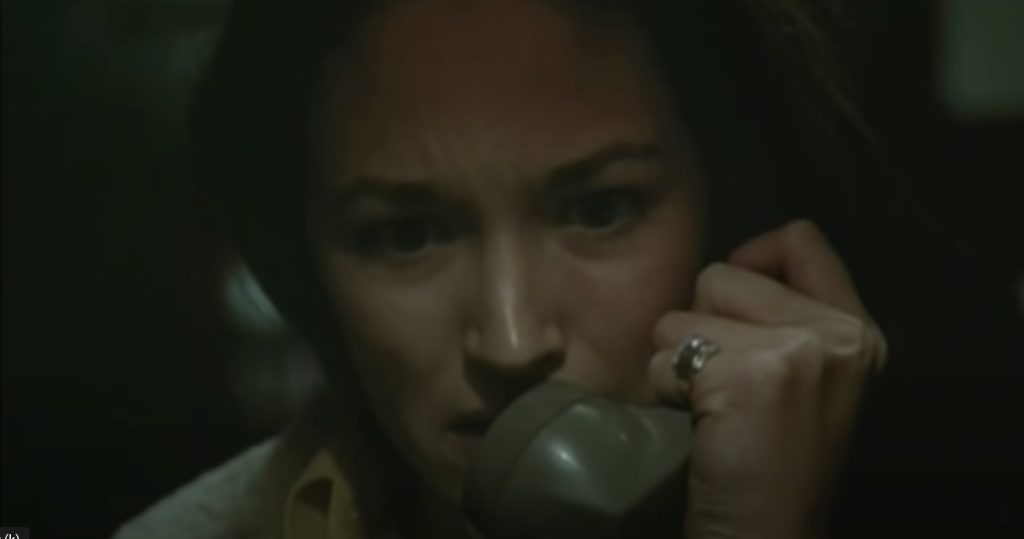
But what makes a slasher, and how did Thirteen Women earn the distinction of being the first? There are a few movies that could earn this distinction, depending on your point of view. 1974’s Black Christmas establishes a template for modern slashers that includes relatable victims, an unseen and mysterious killer stalking his prey, and brutal kills.
The Texas Chainsaw Massacre also hit theatres that year. There is a healthy debate on how much of a slasher it is. One of the core elements of a slasher film is the killer stalking their prey. Leatherface is doing the opposite, as all his victims wander into his property. Other slasher elements are present; the mask, kills, and even a traumatic or tragic backstory for the killer. I wouldn’t include it in my slasher list, but I wouldn’t argue with anyone who wanted to.
Close but Not Quite a Slasher
There are older examples of movies that have these elements. Psycho gets brought up as a movie with slasher elements. Although it’s my favorite all-time movie and its influence over the genre can’t be ignored, it’s another one that I wouldn’t add to the list. It watches more like a mystery than a slasher. The low body count and lack of stalking contribute to this as well. It takes more than just a masked killer to make a slasher.
Which brings us back to Black Christmas and the next movie it inspired: Halloween. In 1978, John Carpenter set a mainstream standard for slashers. Michael Myers stalked, stabbed, and strangled his way into the hearts and nightmares of America. Even H3 enjoys the original Halloween movies. The commercial success of Halloween kicked off the golden age for slashers. Friday the 13th started its long battle with the MPAA in the early ‘80s, and genre innovators like Wes Craven gave us the supernatural slasher Nightmare on Elm Street. So many of my favorite movies come from this section of film history. The mid-’80s saw the genre drop in popularity, and limp along until 1996.
What’s Your Favorite Scary Movie?
That’s when Scream brought the slasher back in a big way. This time around, the films that followed couldn’t match the success or creativity of Scream; they failed to innovate on the formula. Somewhere along the way, “slasher” became a derogatory way to dismiss a movie, reducing it down to the worst elements of the most exploitative examples of the genre; cheap production, low quality acting, misogyny, and gore.
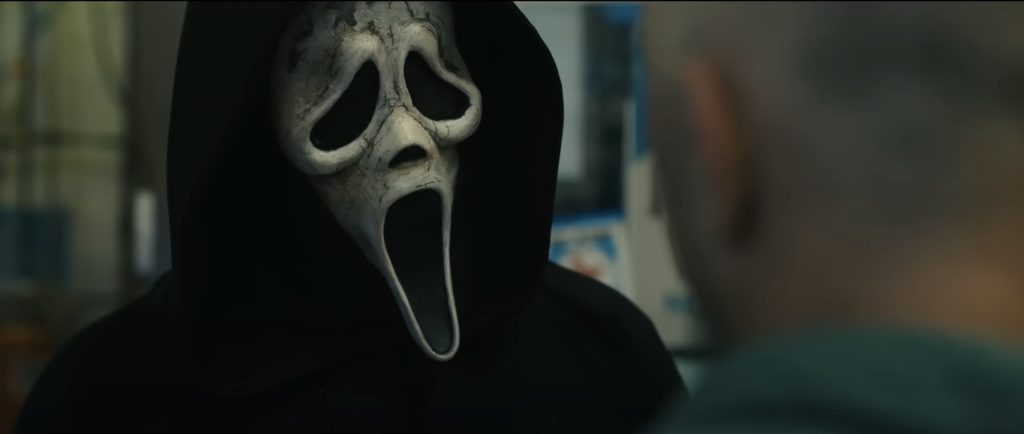
To correct this injustice, I’m officially declaring 2025, “The Year of Slashers”. These movies can offer more than just obnoxious, topless teens and over-the-top kills. Slashers have been a backdrop for some of our favorite monsters and used to tell stories filled with subtext and social commentary, all while delivering some of the best and goriest deaths in horror.
All through 2025, I’ll be looking at films that influenced the genre, and films that were influenced by the genre; the good, and the ones that have people questioning my tastes. Fortunately, Thirteen Women probably isn’t one of the latter movies.
Thirteen Women Recap and Review
Although it’s titled Thirteen Women, there are only eleven women featured in the movie; two were cut in editing. In fact, editors cut an impressive fourteen minutes out of the movie, leaving a run time of only sixty minutes. There is a lot of plot to cover in that hour.
The movie opens with a quote about the power of suggestion. Circus star and trapeze artist June Raskob is reading a troubling horoscope from a clairvoyant, Swami Yogadachi. He has read the stars and is predicting death for someone close to her. This prediction fills her with such dread and anxiety, that when it comes time to catch her sister, May, during their most dangerous trick, she fails. May plummets to her death, and June is driven mad with guilt and grief.
The Star Revealed
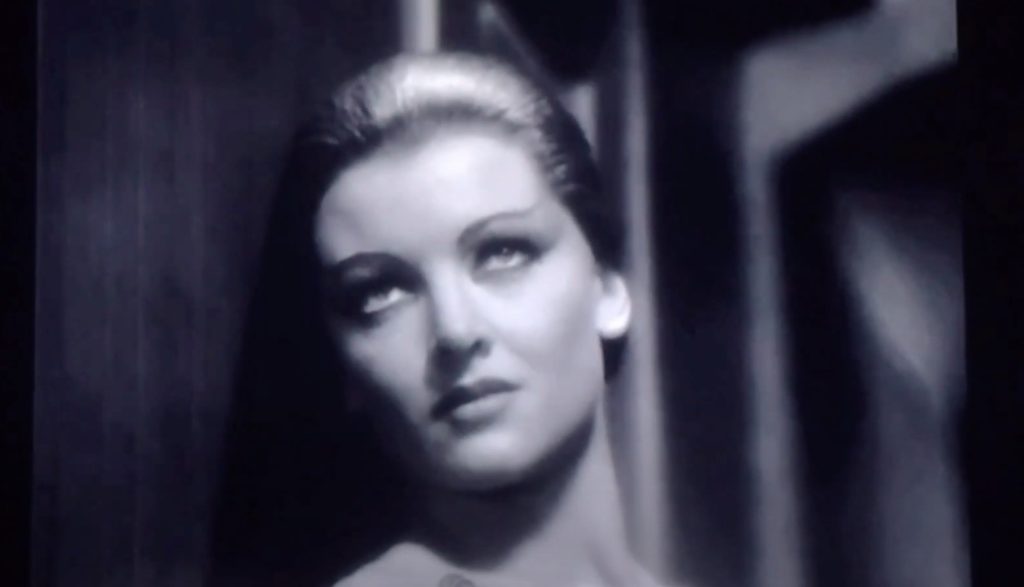
Swami Yogadachi is wracked with guilt over his prediction, mostly because the horoscope he wrote had foretold a positive future. He’s written another a positive horoscope for one of June’s sorority sisters, Hazel Clay, but is unsure of sending it. We then meet his secretary, Ursula. She is clearly dressed and made up to look different from the rest of the women cast. Her make-up is heavier and emphasizes her eyes and her wardrobe is more over the top. In 1932, these elements might have immediately signified certain things about her genetic background; in 2025, I needed them spelled out.
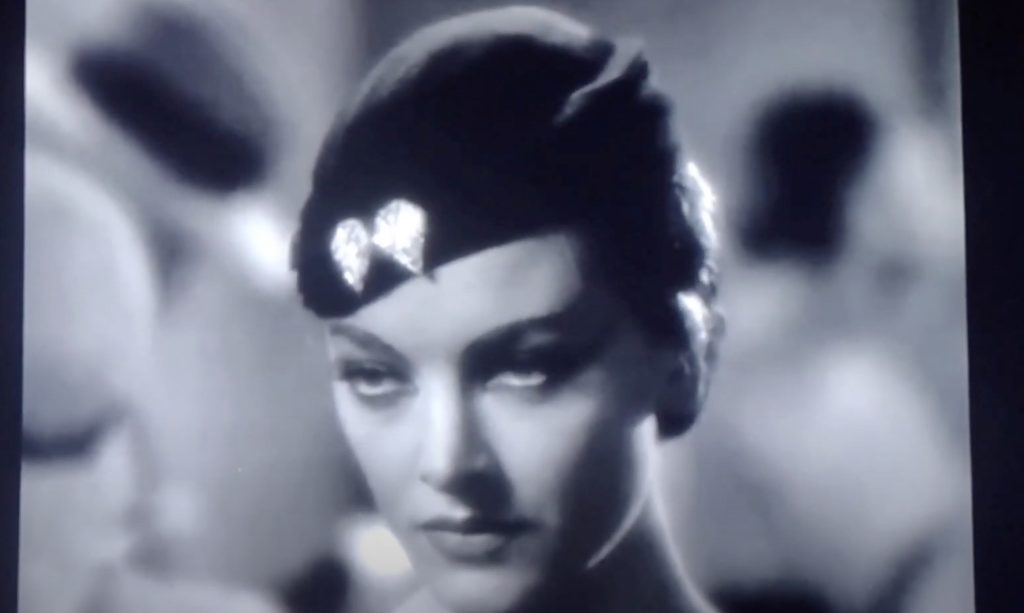
In either case, Ursula is a stunningly beautiful woman who Yogadatchi is very much under the spell of; figuratively and literally. After getting him to tell her future — death by train — she hypnotizes him, putting him to sleep. She then switches out the good horoscope for one predicting more death, and imprisonment.
After doing so, she opens a yearbook to view pictures of twelve members of a sorority. She slowly draws black “X”’s through two of the pictures, June and May, before hovering her pencil over the third, Hazel Clay.
More Victims
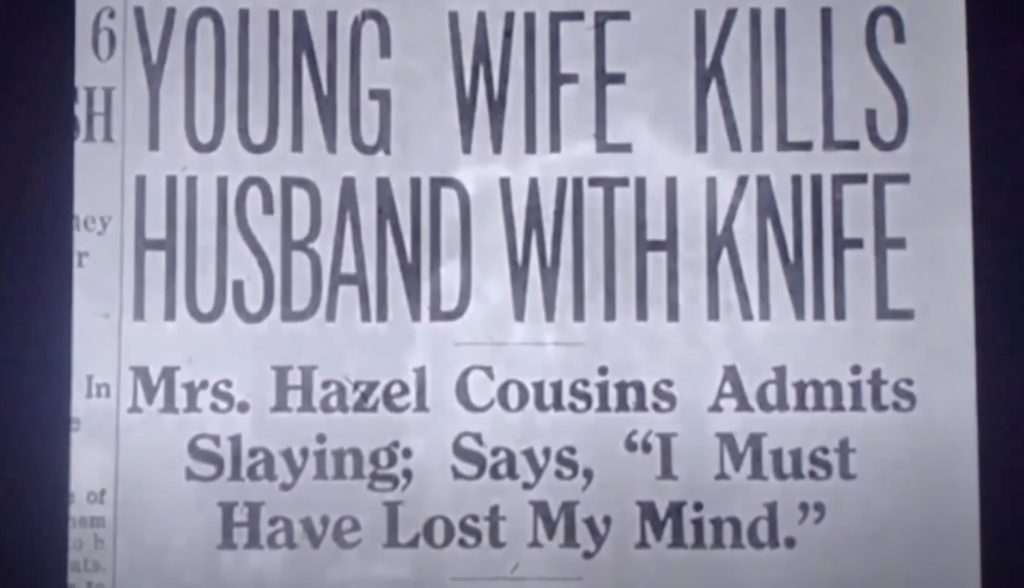
Shortly after getting the horoscope, Hazel Clay stabs her husband, killing him. This is such an underdeveloped scene and could have used so much more set-up. What was Hazel’s breaking point? What could have led a normal woman to murder her husband? This was clearly not a stable relationship. As predicted, she ends up jailed for her crime.
Laura and Grace, two more sorority sisters seen in the yearbook, meet to discuss the events. Laura, the former president of the sorority, ridicules the whole idea, choosing rational beliefs over superstition. Grace reads a letter from Yogadachi that predicts his own death, saying that if it happens, then all the others must be true too.
Yogadachi and Ursula go to the train station on the predicted date, and she bewitches him into throwing himself under a train. This death confirms the validity of the predictions for the other women, including Helen Frye, who is particularly vulnerable due to the passing of her daughter.
Ursula Gets Bolder
Helen is on a train heading to the west coast to be with Laura and Grace when she meets Ursula. We learn that Ursula was sent to the same school as the others after being saved in India by a missionary. This is the first hint we get at what was surely a terrible childhood for Ursula.

Helen thinks she is confiding in a friend as she tells everything to Ursula. Helen has a gun with her, but even though she mocks the prediction of suicide that she received from the swami, she grows despondent overnight. She eventually kills herself while Ursula waits outside, listening. Afterwards, she breaks in and removes Helen’s sorority pin.
Ursula is questioned about the murder by Seargent Barry Clive but denies knowledge. The detectives rule the death a suicide, but also comment that suicide is murder since something drove her to it.
The Reunion
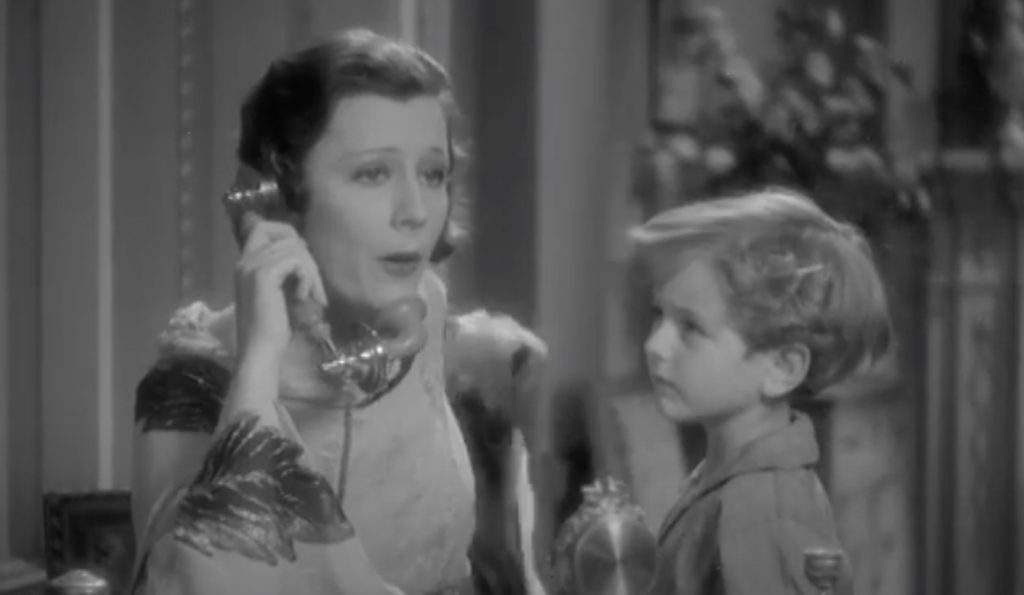
Three women are left for the reunion dinner: Laura, Jo, and Grace. Despite her disapproval of the horoscopes, Laura did write the swami and gets bad news about something happening to her son Bobby on or before his birthday, in three days.
Identifying a Killer
Laura’s chauffer, Burns, is working with Ursula. Ursula hates Laura the most since she was the sorority president and is targeting her son to inflict the kind of long-lasting, life-altering trauma she believes she suffered.
She sends him poisoned chocolate, but Laura intervenes in time and goes to the police with the whole story. They almost get it right, with the swami being hired, before getting caught up in the in crazy details. Clive notices her sorority pin and goes to talk to the headmistress. She tells him about Ursula Georgi and her isolation from the group, resulting in her leaving the school. The headmistress writes it off as “teen girl stuff”, diminishing the impact they had on Ursula’s life.
Laura is starting to break down with fear for Bobby. Meanwhile, Ursula is making bombs. She puts explosives in a ball for Burns to give to Bobby. She has Burns under her spell since he really does not want to blow up a little boy, but he gives him the box with the bomb any way.
1930’s Racism
The police get a picture of Ursula and realize she is involved since she was at the train station. They reinforce the racism she endured at school by calling her a “Half-Breed”.
Burns is starting to lose it as Laura wants to go to the police. They learn that Burns was the swami’s chauffer before he was Laura’s, and that Ursula has recently bought dynamite.
There is a short car chase where Burns tries to escape with Laura in the car, preventing her from reaching the police. Clive manages to get the bomb out of the car and stop it as Burns escapes.
Back at their lair, Burns and Ursula fight as he realizes that she’s been using him. She leaves him behind to take a train out of town as a dragnet is formed, searching for them.
Laura and Bobby take a train to get out of town and escape Ursula, but she’s on the same train and waiting to confront Laura.
She’s Not Wrong
Ursula makes some valid points about how she was treated as a biracial woman in 1930’s. She alludes actions by white sailors when she was young but Laura cuts her off. Laura and her friends bullied Ursula out of her one opportunity to become a respected member of society. Their cruelty forced her to leave finishing school and dashed her hopes for improving her life. Laura makes excuses, saying she can’t use their behavior to justify murder. Ursula responds, “I can”. The delivery of this line is incredible.
She tries to finish the job and kill Bobby, but the police are also on the train waiting for her. As they close in on her, she instead leaps to her death, fulfilling the swami’s prediction for her, and keeping her fate firmly in her own hands.
Why is Thirteen Women The First Slasher?
The killer and her tragic, although underexplored, past help set that standard for future mysterious masked killers. Many of our future murderers snap due to bullying or “pranks” at the hands of fellow students. Ursula methodically makes her way through her list of victims, marking through the photos with an “X” after her revenge is complete. She stalks them, like we see with Helen on the train, pushing them to believe in her manipulations.
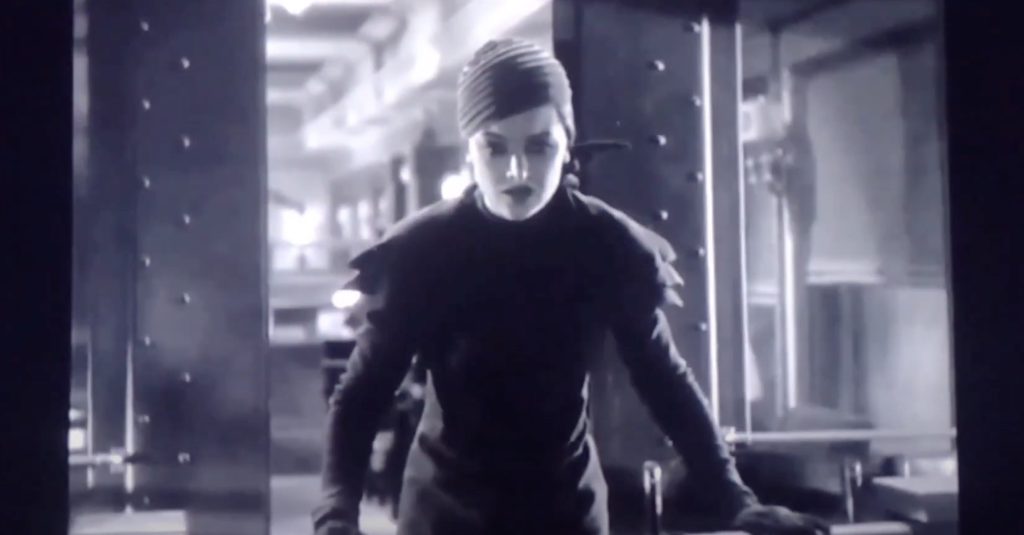
Ursula would be a much more compelling character without the dated, and now horrific, racism attached. While the movie works with one hand to sell the theme that it was the sorority sister’s cruel treatment of an outsider that invited this, it diminishes that messaging by relying on stereotypes. I understand it was written in the 1930’s; people were not as culturally sensitive as they should have been. That doesn’t make it any easier to watch today. It does, however, ironically prove Ursula’s point.
She’s a great villain though, driving people to madness, murder, and self-destruction. She’s capable of seduction and cruelty at the same time and feels no guilt. We know the horrors she endured, and limitations placed on her. Had the movie spent more time developing the women, we may have even sided more firmly with a potential child murderer. Isn’t that also part of a slasher? The feeling like maybe the killer is the best part.
First Final Girl
Thirteen Women also gives us our first Final Girl in Laura Stanhope. Laura is a fiercely independent woman and proud single mother, which for 1932 was unusual. She remains strong in the face of danger, until it’s focused at her son instead of her. Even then, she’s about action, going to the police and getting out of town, all of which are smart things to do. In a longer, more fleshed-out movie, she really could have been a compelling character.
Despite its flaws, Thirteen Women helped shape future movies and create a stronger template for slashers. I know Hollywood is big on remaking good movies, but putting this unpolished gem in the right hands could really be something interesting.
Final Thoughts
Thirteen Women is not perfect, but it’s a clear moment in movie history. Sadly, much of its notoriety is for reasons outside the realm of fiction, none of which I got into since they aren’t relevant to the current topic. If you are interested, this is a good place to start. It deserves a second look on its own merits, as a film not afraid to have progressive conversations in a time not known for it, and for establishing tropes that we still use today.
Thirteen Women is available to rent on Amazon.
Leave a Reply