

In 1963, Roger Corman gave a young Francis Ford Coppola the opportunity to direct the low-budget film Dementia 13. Corman was looking for something tonally in line with Psycho, heavy on psychological drama and brutal knife kills. Despite giving creative freedom during filming, Corman was displeased with Coppola’s finished film and required changes to make it releasable. American Zoetrope, Coppola’s production company, released a restored director’s cut in 2017.
- Directed by: Francis Ford Coppola
- Written by: Francis Ford Coppola Jack Hill. Al Locatelli
- Starring: William Campbell. Luana Anders. Bart Patton
Dementia 13 is really most notable for giving us Coppola, who would go on to direct some of the most critically acclaimed films of the ‘70s, win five Oscars, a BAFTA, three Golden Globes, and two Cannes Film Festival Prizes. He also gave us Braham Stoker’s Dracula, which would change how we imagine Dracula for decades.
And it all started with a slasher.
A slasher that is a rip-off of not just a thriller, but arguably the most well known thriller of all time.
Recap and Review – Spoilers Ahead
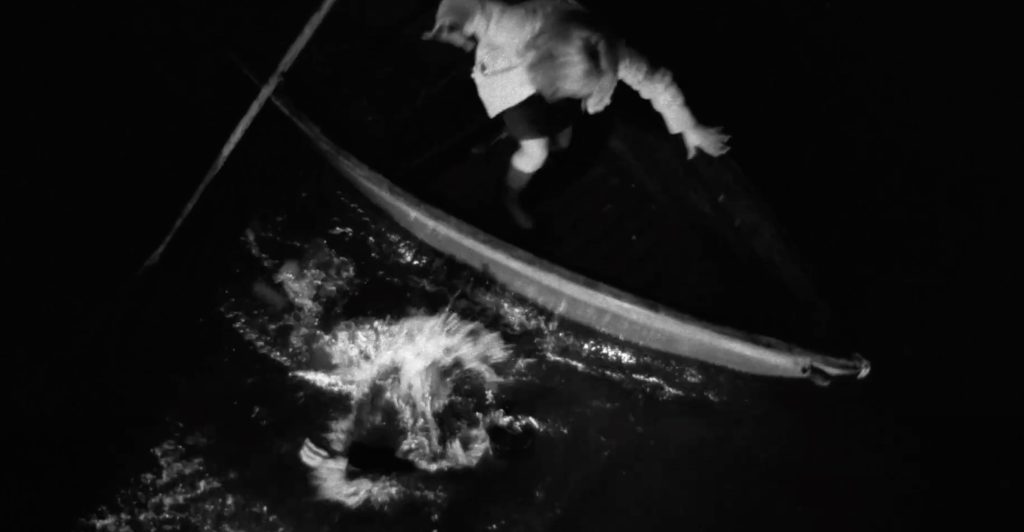
We open with John and Louise in a rowboat, plotting to change his crazy mother’s will. John has a heart attack while rowing and dies. Louise is unable to revive him, despite slapping him several times. Instead, she ties his body to anchor and dumps him and his radio overboard. Right off the bat this movie makes an impression. The radio continues to play as John’s body sinks into the lake. The distorted fading music sets an eerie tone for everything that else that happens.
Louise plans to make it look like John is still alive just “away on business” in order to get in good with his family and earn a spot in her will. She covers her tracks well, then makes her way to the family castle in Ireland. John’s brothers, Billy and Richard, are gathering there for their annual memorial for their sister Kathleen. Also there is Richard’s girlfriend, Kane.
There she learns more about the family and the tragic death of the youngest sister Kathleen, who drowned in the pond as a child. The mother is incredibly rigid and superstitious about Kathleen, refusing to let anyone but family attend the memorial.
Louise learns more about the complicated family dynamics. Richard wants to marry his girlfriend, but the mother is against it. No specific reason is given although they do mention that she is an American girl. This is clearly seen as a negative. Louise even lets Richard know that Kane’s been “raised on promises”. Sound familiar?
The Other Brother
The aftermath of Kathleen’s death haunts the younger brother Billy. He relives memories of them as children playing innocently in front of the pond. Bothered by this he discusses the memorial with Kane, telling her that it’s the same thing every year. A local poacher, Simon, interrupts their conversation in the creepiest way possible.
The memorial continues as planned, with Louise observing from a high tower. When Mother screams and faints. Louise comes running to help, swooping in to appear as sympathetic and carring. Mother is distraught because one of the flowers died when it touched the grave.
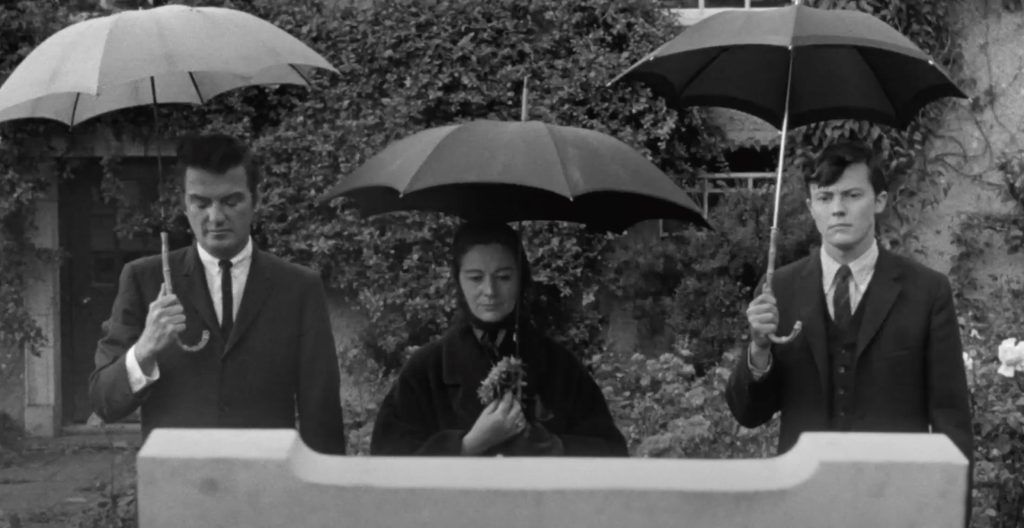
Louise takes this opportunity to try to worm her way into Mother’s good graces, telling her that Kathleen’s spirit will talk to her. We’ve seen from the beginning that Louise is not a good person, but this is excessive, no matter how larger the inheritance is.
As Louise works on the next step in her plan, a man stalks her, seen only by his shoes. She breaks into Kathleen’s room and gathers some of her old toys, unaware that she’s being followed. While sneaking out of the house, Louse runs into Richard. He asks if she’s lost, but she distracts him and makes it out to the pond with the toys.
A Bad Plan
Louise is smart, but she’s not in any way good or decent. It’s what makes her so compelling to watch. Her plan is to rig the toys to the bottom of the lake, so they rise in the morning, convincing the mother that Kathleen’s spirit is communicating with them. What she didn’t account for, is the creepy stone memorial to Kathleen at the bottom of the lake, and the axe murderer waiting for her to surface.
Like Psycho, we find our morally ambiguous leading lady suddenly dead.
Mother is meeting with Dr. Caleb, who is trying to treat her mind as well as her body. He’s got a rather modern take on the mind-body connection. He’s also a welcome addition to the cast, being a clever and pragmatic investigator. Although he tries to distract her Mother is insistent on looking for Louise, but we’ve moved on to a new leading lady: Kane.
The search for Louise starts, but it’s a casual one, no one is aware of any danger, yet. As they lunch on the terrace, her gimmick with the toys in the pond goes off. The doctor immediately knows this is a trick of some kind. As Billy goes to fish the rest of the toys out of the pond, we get a flashback of him as a child being afraid of the pond.
Richard
Richard and Kane talk about the family trauma. He reveals himself to be the observer of the group, someone who has been watching his family suffer, but unable to do anything about it.
As the poacher hunts unsuccessfully around the pond an unseen man stalks him . He finds what looks to be the preserved corpse of Kathleen, but , right before he is beheaded by an axe.
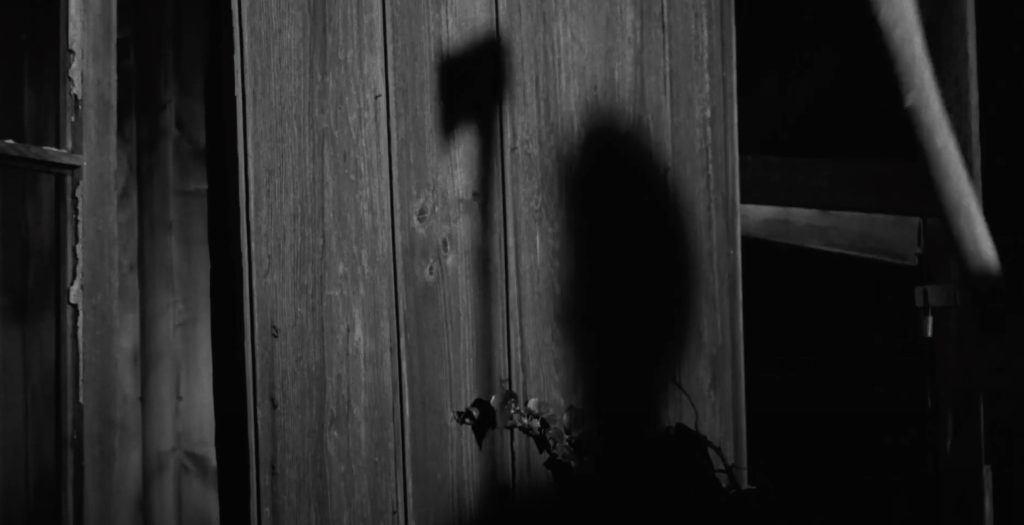
Dr. Caleb has the pond drained, while Mother is getting less stable by the minute. She has a wax doll of Kathleen that she has set up like she’s having a tea party, when the murderer interrupts her. The killer collects the wax doll while Mother escapes, fainting in the courtyard. The brothers quickly arrive and carry her back to the house.
The investigation Continues
Billy talks to Kane about a nightmare he has about Richard and his mother being insane and throwing him in the pond. The next morning, the pond is finished draining, revealing a stone headstone reading, “Forgive me Kathleen”. Dr. Caleb reveals that both brothers have worked in stone and iron.
Although they get mad at him for his questions, Dr. Caleb insists he is only doing this to help cure the family of the troubles of the past.
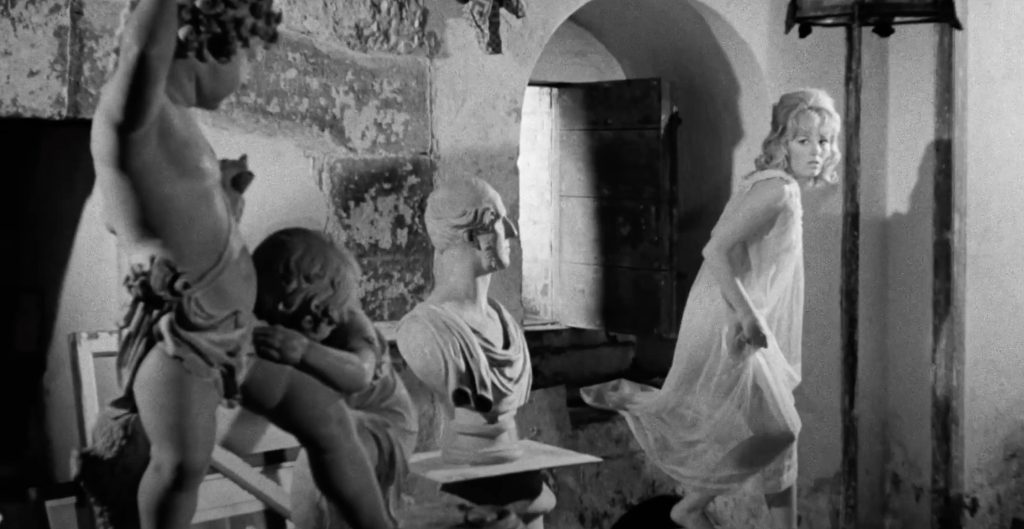
That night, Richard searches his father’s studio for evidence while Kane spies on him. For some reason she does this in a flimsy nightgown.
Dr. Caleb takes Billy out for a drink and questions him about his sister’s death. He knows that Billy is involved due to his lifelong treating of the family and recognizing odd behaviors.
Time for a Wedding and A Reveal
With the mother too out of it to object, Kane and Richard get married. At the wedding, Dr. Caleb tries to talk to Kane about the danger she may be in. At thins point the suspect pool is down to the brothers and Dr. Caleb is feeling responsible for the families struggles and weirdness. Kane disregards his words. She’s finally happily married to Richard. Something she thought might never happed due to his families trauma.
Frustrated with not being listened to or believed Dr. Caleb continues his search alone. He finally finds Louise’s body, along with the wax doll of Kathleen, and takes the doll, putting it the town square to draw out the killer: finally revealed to be Billy.
While playing as children, Billy threw Kathleen in the pond, and she drowned while he ran away. Over the years, guilt slowly drove him mad. Billy charges with his axe, trying to kill Kane on her wedding night. The brothers fight, but Dr. Caleb shoots Billy dead, ending his tragic and murderous tale.
How Is It a Slasher?
Dementia 13 covers a lot of the tropes. It takes place in a remote and creepy location, and many of the scenes are shot to emphasize isolation, even before we get to the castle. The opening boat sequence is so off-putting and eerie.
The family home is a crumbling and desolate looking Irish Castle. It’s so removed from the every day world. The sparse cast and sprawling grounds give the impression that the Haloran family is in their own world.
Traumatic Past
While we don’t get the full story till the end, the killer is traumatized by his childhood actions, the guilt driving him to murder anyone to poses a threat to Kathleen’s memory. This includes either the actual memory or its embodiment in the wax doll.
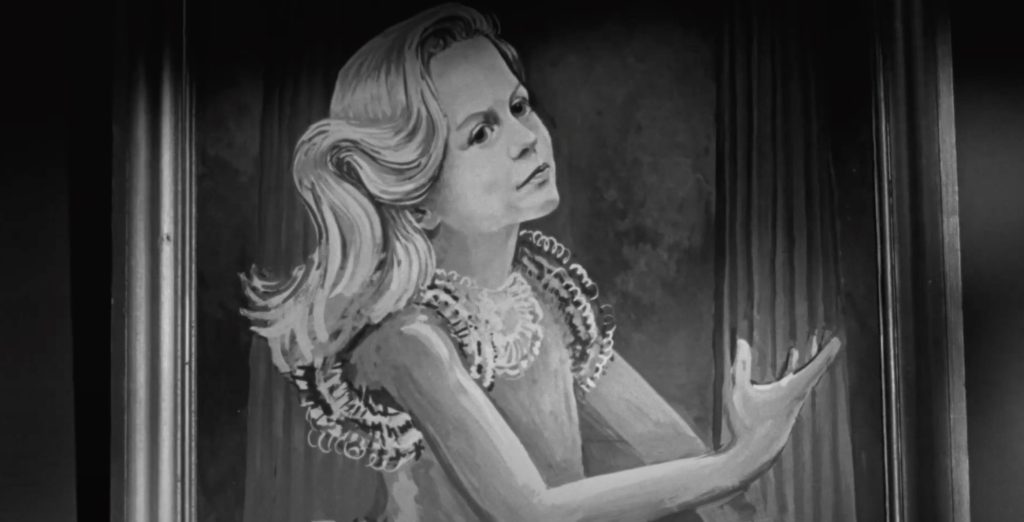
The Psycho references are clear, with the mentally disturbed killer displaying almost two personalities: the timid younger brother, and the axe murderer. But Dementia 13 ups the ante with the kills, trading Norman Bate’s delicate knife for an axe to drive home the brutality. The body count is low, two deaths by the killer, but he makes up for it with enthusiasm.
Like Norman, Billy’s victims do enter his territory. However once there, Billy does engage in some standard slasher stalking, following his victims even when he misses his chance to kill them. He doesn’t wear a mask but does lurk in shadows. The end result, keeping his identity hidden is the same.
Is It Any Good?
I mean, you could just watch Psycho, but if I’m honest most days I could watch Psycho. As soon as I finish this, I’m probably going to fire up my Hitchcock boxset. There are some great visuals in Dementia 13 and probably worth watching just for the look alone.
It’s always interesting to see where legendary directors started. Following the evolution of their style from their first film to the last is a treat. It’s clear, even in this low-budget horror film, that Coppola had style.
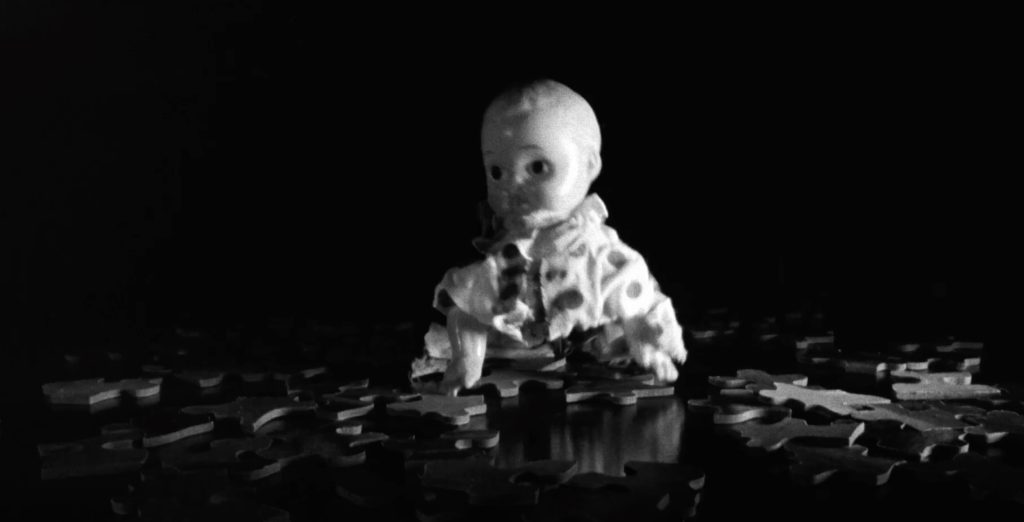
Judging it on its own merits, aside from the Psycho references, Dementia 13 is weird and moody. It may not have a ton of kills. but it makes the most of the ones it has. Louise is a great twisted leading lady, and while I get why she must die early, the film does suffer a bit without her. Mostly because of the lack of urgency in finding her.
Dementia 13 has a surreal quality to that makes the whole thing feel like a bit of a fever dream, in a good way. It’s worth the time to watch the restored cut American Zoetrope released.
Legacy
Dementia 13 is a great example of a movie that takes inspiration from a non-slasher and pushes it back into familiar territory by building on the sub-genre tropes. Even if they weren’t fully established at the time.
Can any concept be reworked into a slasher? Psycho was pretty close already, but we’ve seen a recent influx of movies that take classic concepts and give them the slasher twist. Freaky is Freaky Friday; It’s a Wonderful Knife – that one should be kinda obvious; Happy Death Day is Groundhog Day; Time Cut and Totally Killer are Back to the Future, but as a slasher. Roger Corman may have been starting a decades-old trend when he went to Coppola and asked him to take Psycho and make it more brutal. In any case, we’re all much better off.
Dementia 13 is available on streaming and blu-ray
Check out my other slasher reviews here:
Leave a Reply