
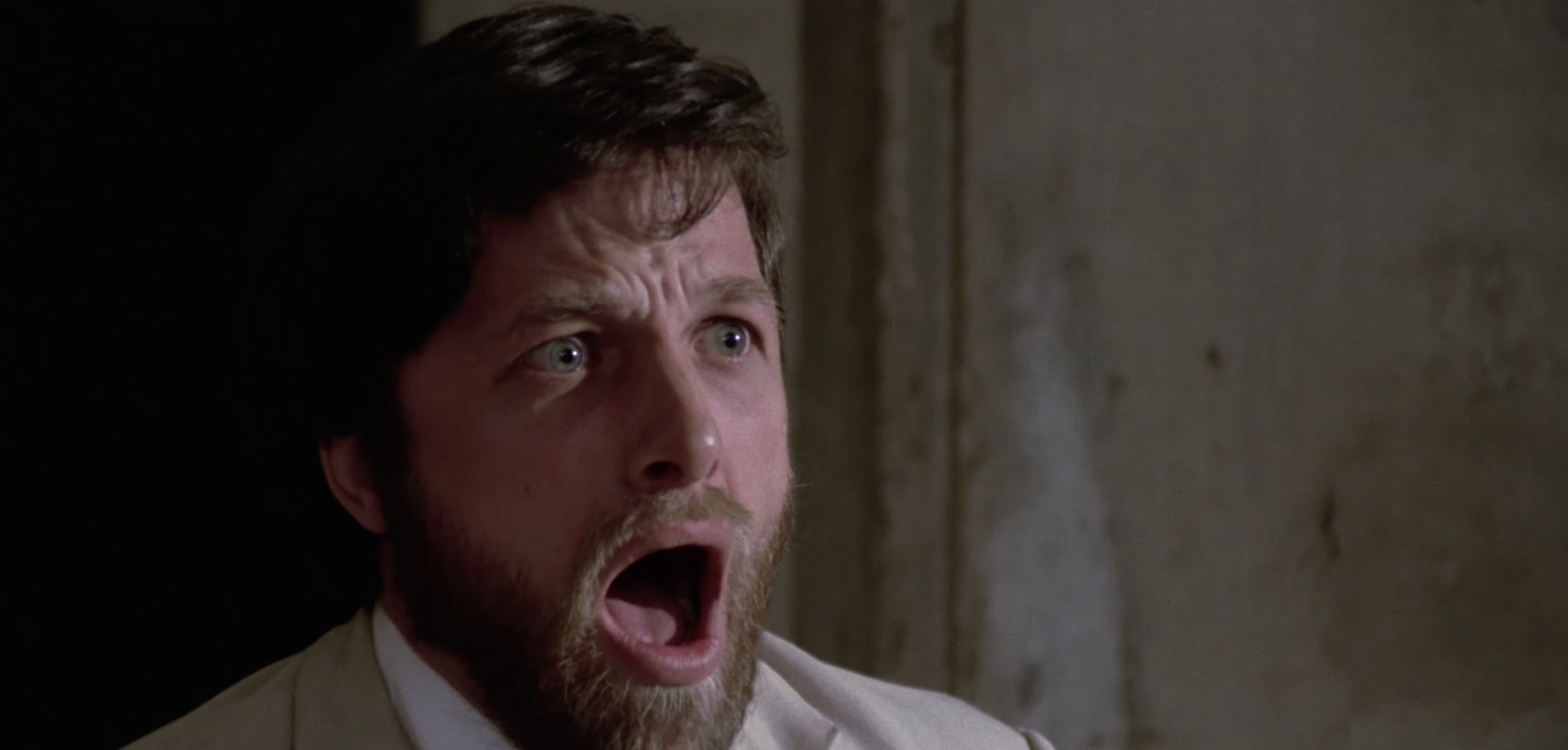
Last week, we went all in on the sexy side of giallo. The House with Laughing Windows has a darker focus. This is not your typical giallo. Because it’s light on the usual tropes and trappings, I think it often gets overlooked. It doesn’t have the style or visual drama of an Argento or Bava. What it does deliver is something quieter but more disturbing.
- Directed by: Pupi Avati
- Written by: Pupi Avati. Antonio Avati. Gianni Cavina
- Starring: Lino Capolicchio. Francesca Marciano. Gianni Cavina
The Plot
Stefano, an art restorer, is hired to come to a small village and repair a fresco in a church. From the beginning, it’s clear that there is more to the painting, a violent scene of the martyrdom of St. Sebastian, and the town itself.

As Stefano learns more about the artist behind the fresco, people in the village start dying, starting with the man who recommended Stefano for the job. As Stefano investigates the painting, he gets to know the townspeople better. Since under their pleasant village exterior they are all deeply disturbed, this does not go well for him.
The Themes
Hidden secrets are the most prevalent theme of The House with Laughing Windows. No one is who they seem, and everything has buried layers. Even sweet Francesca, Stefano’s love interest, is a bit of a snail-loving weirdo. She’s the kind of girl who sits in the dark for two hours listening to the recorded ravings of an insane artist. And being honest, she’s the most normal person Stefano meets.
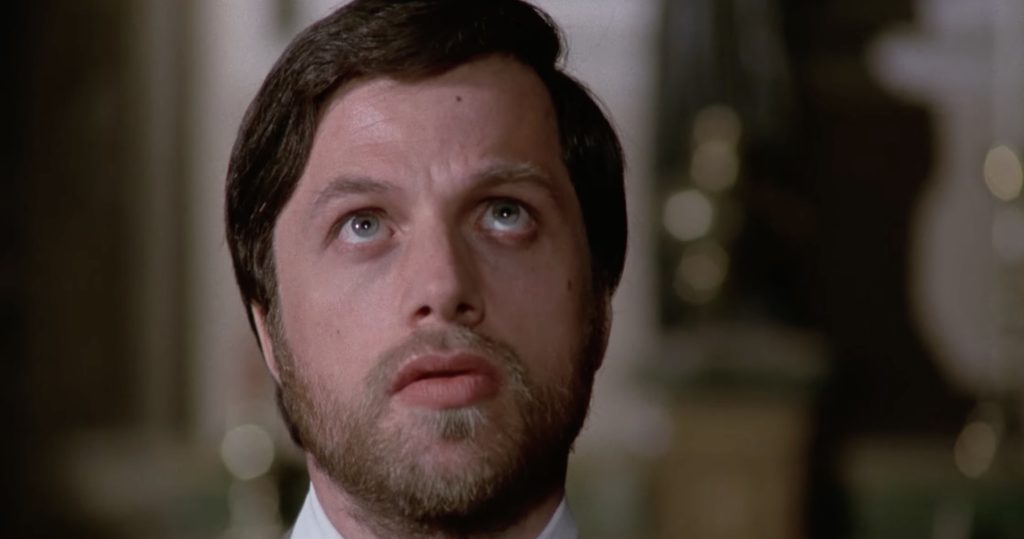
The House with Laughing Windows also has a lot to say about obsession, art, and the past. It makes it an interesting choice in that we know almost nothing about Stefano himself. He’s the main character, but he’s almost without agency, dropped into a cycle that has happened and will continue happening. This adds to the feeling of horror and dread as the movie continues, and the feeling of inevitability takes over. Somewhere between the fridge full of snails and the nightmare flashbacks, you begin to realize this will not end well for anyone.
The Setting:
Ok, the plot is cool and all, but where and when this takes place is far more important than all the fun murder bits. The village where Stefano is working is trying to revitalize its economy post-war. While the war is not overtly discussed, the townspeople do reference it. One of the hotel owners specifical mentions that the last tourists they had were the Germans.
The entire atmosphere is one of the town suffering from trauma. Bad things have happened here, and everyone knows it. It’s clear that the townspeople are willing to make some sacrifices to save their struggling home. They are also unwilling to bring their past crimes into the light, something they must be willing to do to fully move on. Compounding the problem is that some people want to profit from the history of the town while not acknowledging its brutal reality.
The result is a village full of people stuck following the whims of a madman. They’re repeating the same patterns until they are dead, or the economy dries up, and too many people leave. This is a shockingly relevant plotline. I suspect it always will be.
Is It any Good?
Yes, although there’s one line that makes some weird assumptions about Brazilians. I kinda want to apologize to them, since other than that, I really do like and recommend this movie.
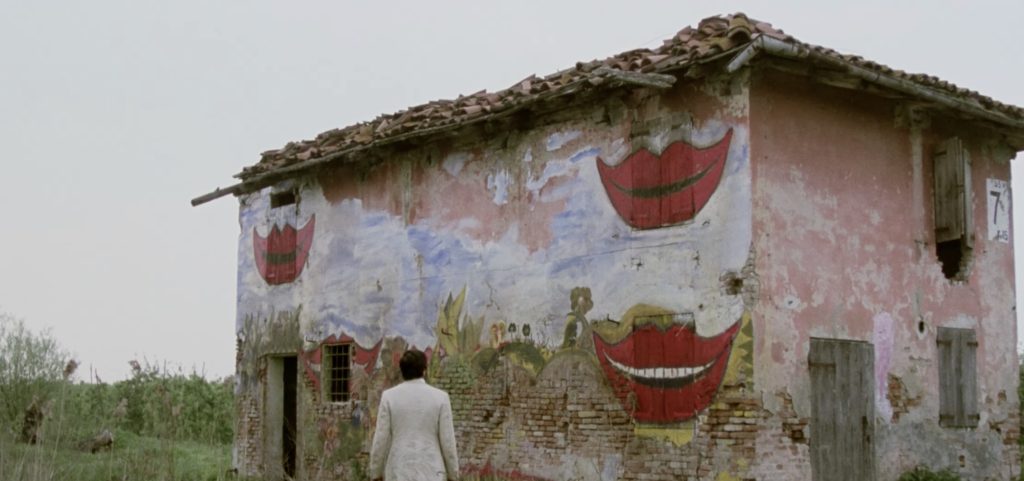
One caveat: this is not a fast-paced movie. The movie unwinds at a deliberate pace, dropping dread into every scene, building to an unforgettable conclusion. Now, being honest, long-time giallo and horror fans will have seen several of the twists and turns coming from the beginning. However, in the final act The House with Laughing Windows still manages shock and surprise.
How Giallo is it?
This is hard to quantify. There is no black-clad, gloved killer. No close-up of bladed weapons. What The House with Laughing Windows excels at is the surreal nightmare scenarios that giallo is known for. The opening with a hazy flashback of a murder, complete with ominous narration, sets the tone for what will unfold as Stefano delves into the mind of a mad painter.
In a lot of ways, this feels more like folk horror. It feels inspired by Wicker Man at the least. I’d love to talk more about its inspirations, but that does get into spoiler territory. As much as some of the set up and setting feels more pastoral, the complex plot and insane motivations of the killer are 100% giallo.
Final Thoughts
If you want a ton of flashy kills, this is not a good choice. There is a low kill count and very little giallo blood. What it lacks in flash, it makes up for in mood and atmosphere. I dreaded every moment of the last twenty minutes of The House with Laughing Windows. That makes it one of my favorites.
The House With The Laughing Windows is available on streaming.
Leave a Reply