
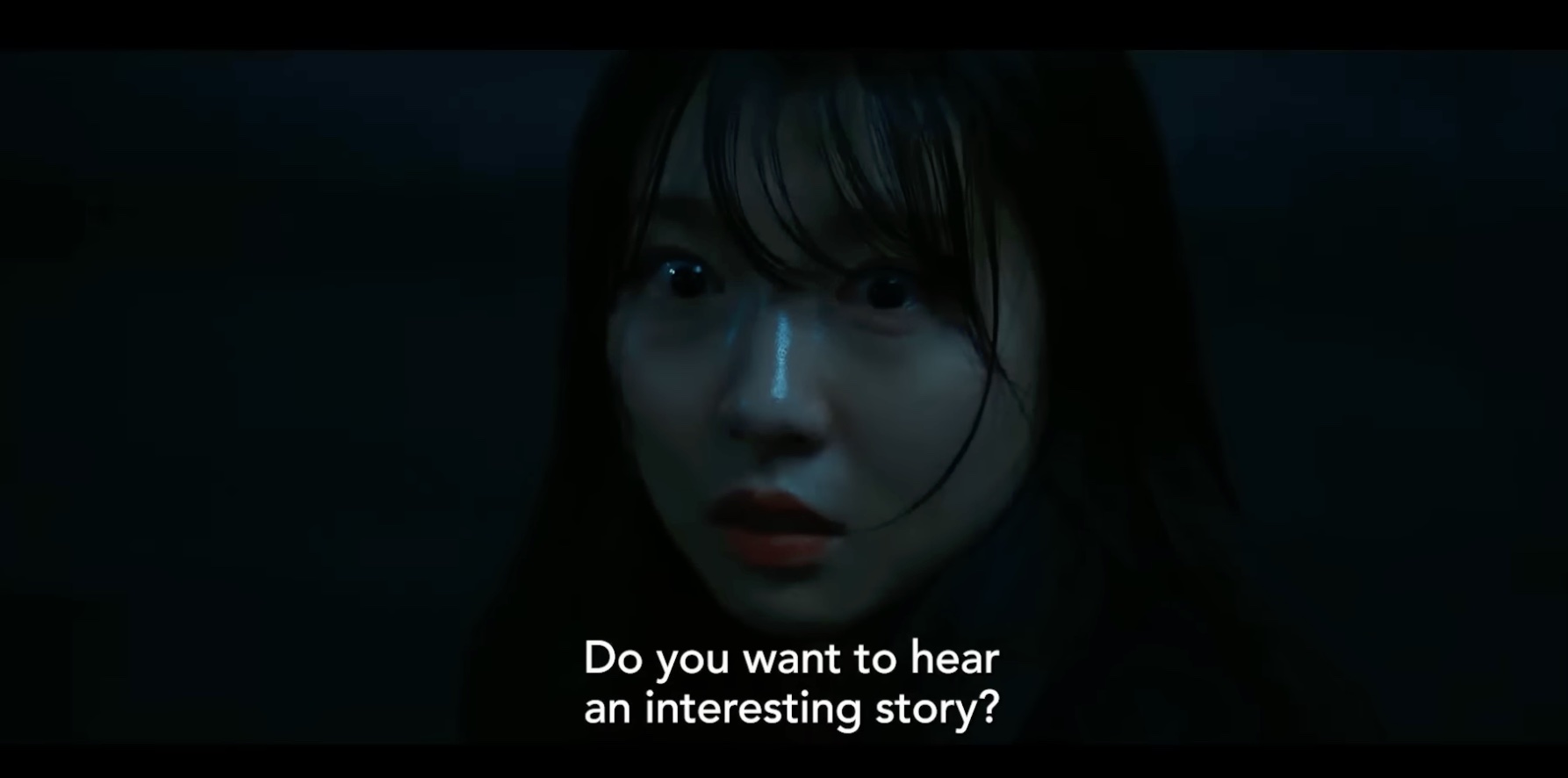
Ghost Train is a South Korean movie that presents itself like an anthology. It exhibits several ghost stories intercut with the story of a formerly popular YouTuber trying to regain her lost popularity. As an anthology it succeeds in delivering short, horrifying stories that are not socially relevant but tie back to the core themes of the wraparound tale.
- Directed by: Se-woong Tak
- Written by: Jo Ba-Reun
- Starring: Joo Hyun-young. Jeon Bae-soo. Choi Bo-min
Da-kyung, the “horror queen”, is looking for content to help revitalize her dying channel. She visits the station master at Gwanglim Station, who tells her stories of the mysterious disappearances that have been rumored to have happened there.
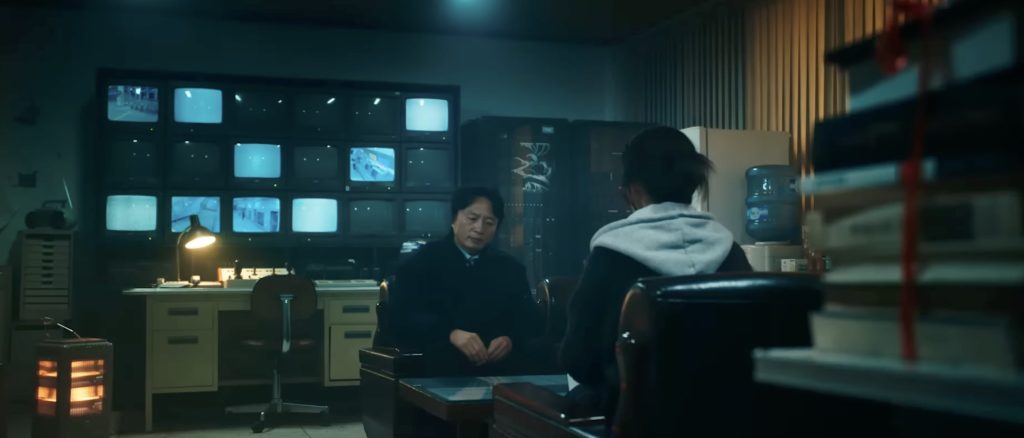
Each of these stories touches on a dark or undesirable part of culture. A young man who drops out of school and avoids responsibility, or a girl who is focused on beauty, and the consequences of ignoring and mistreating the less fortunate and the cost of revenge. While these all exist as perfectly creepy stand-alone stories, they also all tie back to Da-kyung’s story.
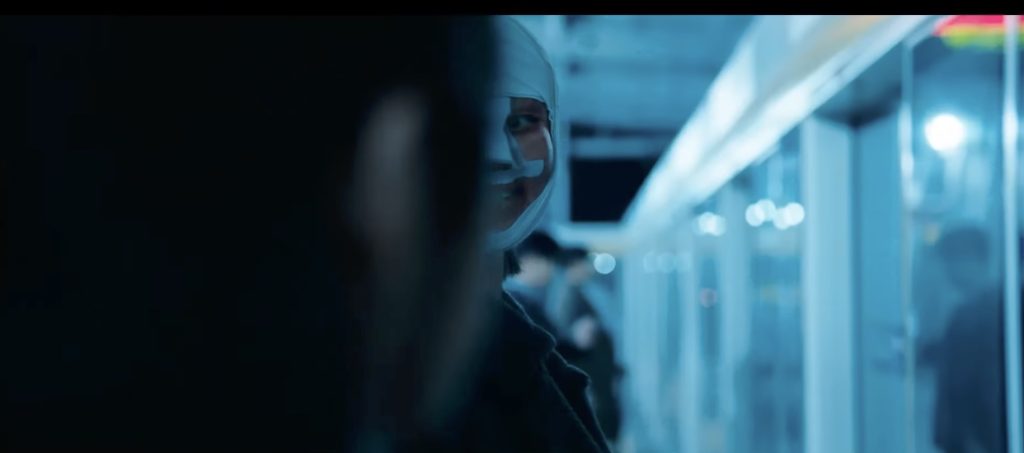
I could spend a lot of time on each individual tale and its cultural relevance. The societal pressures found in each, or how heartbreaking and poignant they all are. To be honest, they’re better seen without spoilers, especially if the viewer finds themselves asking the important questions that Da-kyung missed.
So, What is Ghost Train Really About?
It’s a lot about the commodification of real-world tragedy. While Da-kyung is a sympathetic main character, she’s also ruthless when it comes to her competition for streaming success. She’s jealous of a beauty streamer’s success and relationship with a producer.

But this doesn’t make her more sympathetic to people. Instead, she’s willing to exploit the misfortune and suffering of others for her own gain, even after discovering the truth about the grisly truth of the station as she continues.
Dy-kyung is not searching for the truth. She’s looking for more content, the stories that will push her popularity. Even when the ghost stories become clearly tied to real-world suffering, she continues to treat them as entertainment. She doesn’t consider who she may be harming.
Ghost Train blends together stories of obsession and exploitation to craft a warning about the pursuit of attention.
Why Is This Relevant?
I’m not against horror streamers, at least the ones that focus on fiction. What I have a real problem with is the “gleeful true crime crew”. That’s the parallel I see here. Fame-obsessed streamers recount the stories of other people’s brutal deaths, all the while taking breaks for sponsorships and ad reads. This is where we’ve come to as a society, monetizing the very recent deaths of real people while their still-living relatives can wander across a recognizable thumbnail with an overlaid YouTuber with a faux-shocked expression.
And if you’re wondering, fictionalizing these recent real-world killers does not improve them. The world does not need sexy versions of famous mass murderers in TV shows to make any kind of point. It’s not scary, it’s just tacky.
But Ghoul, you love fictional killers
Yeah, fictional. The kind that doesn’t profit directly from pain and suffering. Fiction should be used to explore our fears. It’s a safe space where we can play out the consequences of dangerous actions. When that line blurs too much, we stop being able to suspend disbelief. Setting everything else aside, that’s just bad storytelling.
Final Thoughts
Ghost Train gives a very firm warning about what happens when the line between reality and storytelling gets blurred. It’s a clever story about the pursuit of fame at the cost of self. Ghost Train has very little gore but some very disturbing imagery. Those with a fear of holes should be warned.
Ghost Train is available on streaming
Leave a Reply