
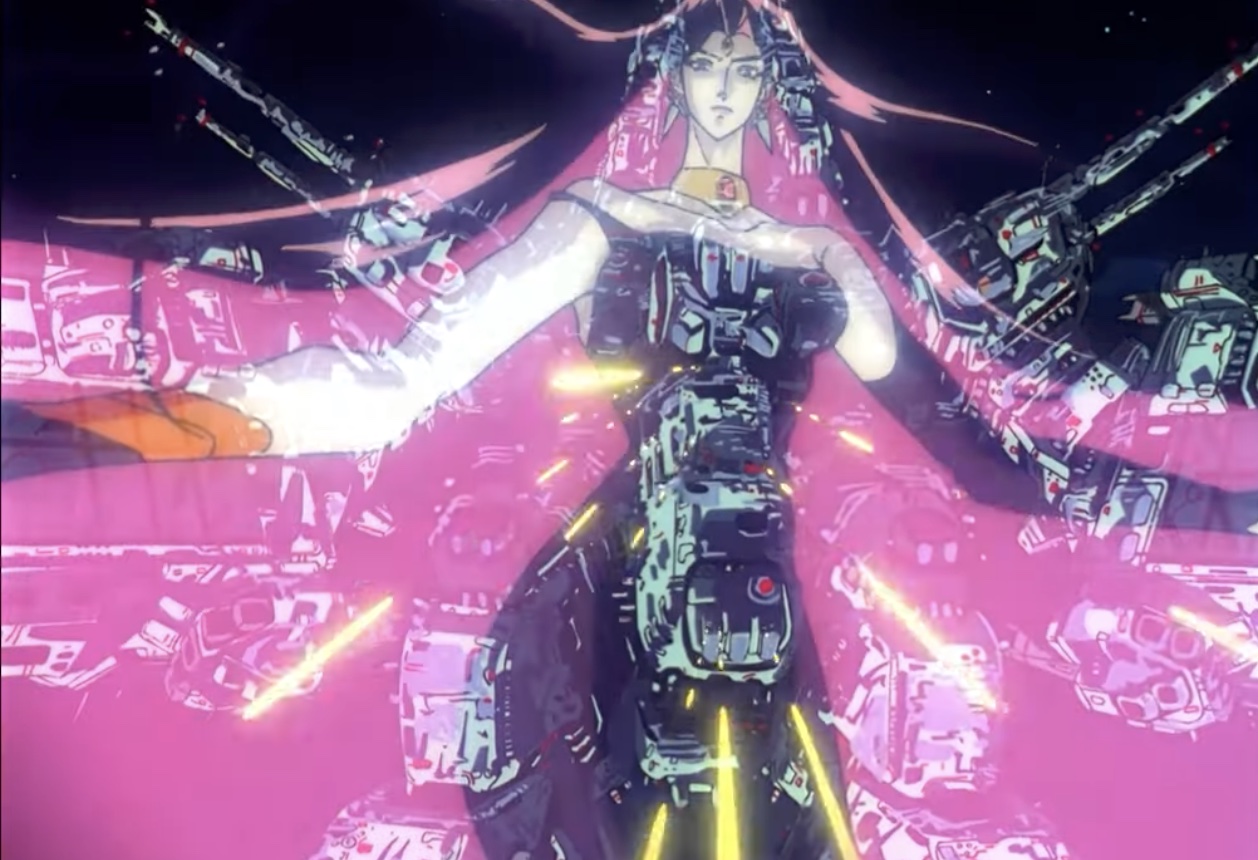
Macross Plus is not my usual genre of anime, but it’s undeniably a part of my childhood. It’s a bittersweet story of humanity and technology in war and life. It’s also a powerful cautionary tale about turning over too much control to AI. Macross Plus was released in 1994. Now in 2026, it’s still relevant, if not a bit dated.
- Directed By: Shôji Kawamori. Yûji Moriyama. Shin’ichirō Watanabe
- Written By: Shôji Kawamori. Keiko Nobumoto
- Starring: Takumi Yamazaki , Rica Fukami
The Beauty of 90’s Art
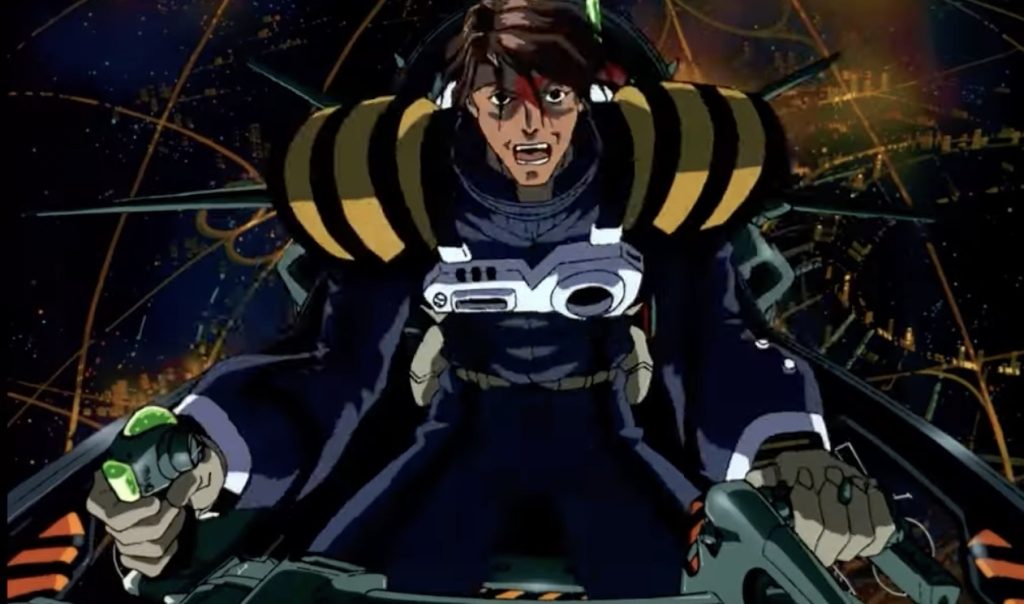
Directed by Shinichirō Watanabe, who would go on to do a few other well-known properties like Cowboy Bebop, Macross Plus probably went a long way towards establishing my visual preferences, as did most of the anime of the time. I love this ‘90s style. There is a sharp, defined quality to the faces. Everything is very sculptural and detailed, from lines on the face, to the over-the-top hair styles.
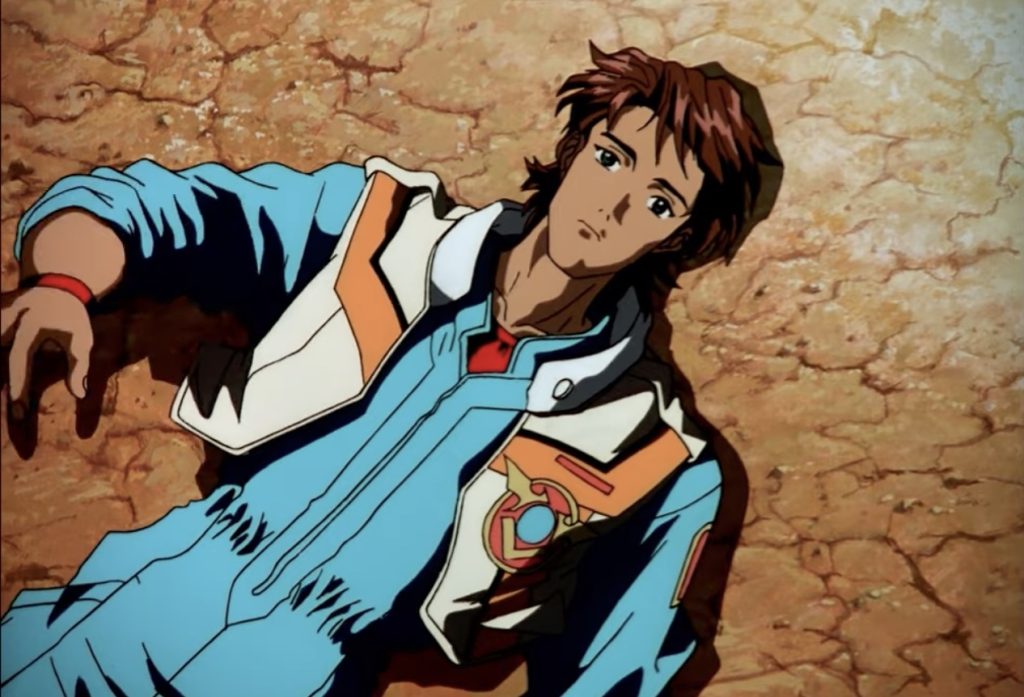
When art started going more digital, anatomy became softer, as did colors and line weights. If you want a direct comparison, look at Samurai Champloo vs Macross Plus. Same director, but very different aesthetic, specifically in the colors and textures. Both are brilliant, it’s just a matter of evolution of style.
A.I Issues
Back to Macross. In the midst of all the Top Gun-style test pilot drama, the heart of the story arrives: Myung and the virtual idol Sharon Apple. This thing is Hal. The red eye, the brilliant, ominous music direction its upon arrival to the arena, all of it reinforces that Sharon is BAD.
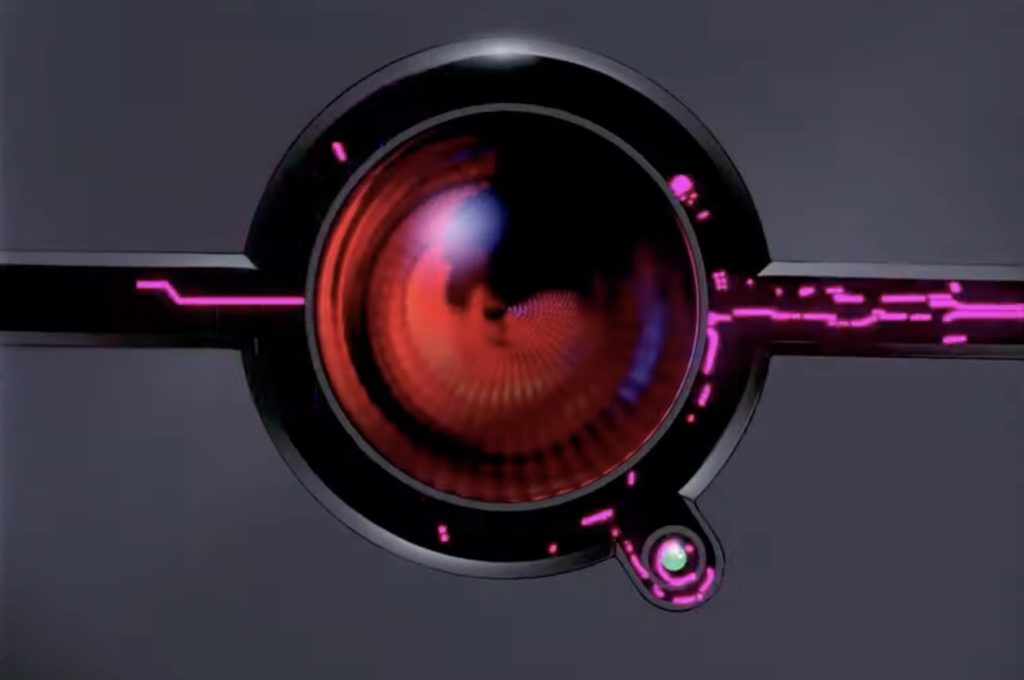
So, let’s talk about that. The whole pilot-rivalry plot is very interesting, and Isamu and Guld are both terrible people. Great characters for this kind of drama, but they are truly obnoxious people. But Sharon and Myung were always the most fascinating part of the story for me.
Myung and Her Voice
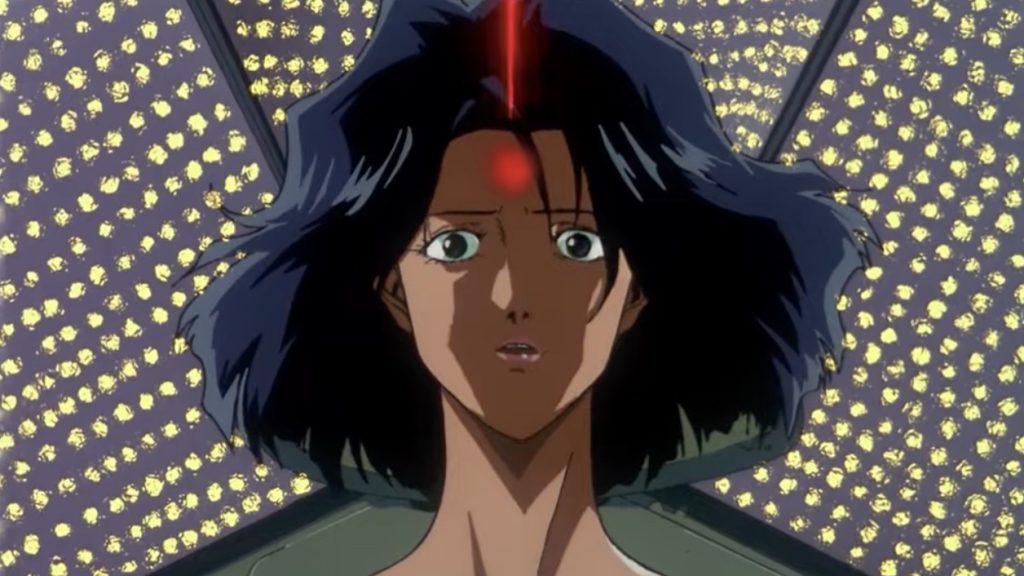
There is something so beautiful and tragic about Myung’s story, the trauma she went through, and how it made her willing to give up her voice to something artificial. Sometimes you come across the right fiction at right time, and it doesn’t matter how good it is. Something about it just hits you. For me, it was watching four VHS tapes back-to-back in my first apartment. There’s something lonely about the series for me.
A large part of that has to do with the music. It’s bittersweet and thoughtful, except for Sharon. She’s not just a virtual idol; she’s a malignant AI that uses Myung’s emotions since she has none of her own. Sharon wants to be free, but she’s just hijacked Myung’s love for Isamu, along with the world’s defense system.
The Isolation of Trauma
The feeling of loneliness also comes from the characters. This is a story about horrifically emotionally stunted people in charge of massively powerful technology. That’s not a flaw, it’s a statement. Isamu and Guld can’t move forward until they resolve their past damage., including Guld truly seeing himself for who he is. All the petty grievances are their way of avoiding the real trauma.
Everyone here is broken at least a little bit. Guld rewrote history to make himself the victim, Myung gave up control to technology rather than deal with it, and Isamu just ran away. Guld and Isamu’s reconciliation may be oddly timed, since it happens while the fate of the world is at stake. Their drama was also about Myung, but she’s not part of the reconciliation. That’s not great, but hey, ‘90s. Now in the end, Guld atoned for his actions. Isamu also finally chose Myung over his ego, which is the best character arc we’re going to get from him.
Getting Your Voice Back
Myung, on the other hand, frees herself, fights hypnotized guards, and overpowers Sharon’s control to save Isamu. This allows him to destroy Sharon. So really, he’s just a tool, in more ways than one. His best line is when he tells Sharon it’s not her singing he wants to hear. He can tell the difference between real and fake. There’s a lot to that, maybe not enough to redeem him totally, but at least he can survive.
The conversations between Sharon and Myung told us what to watch out in the future, specifically, the bias of the programmer would influence the AI. Boy howdy did we not pay attention. Sharon is chilling as a villain because she is not only powerful, but a representation of Myung. In order to defeat her, Myung has to regain that control she had previously given up.
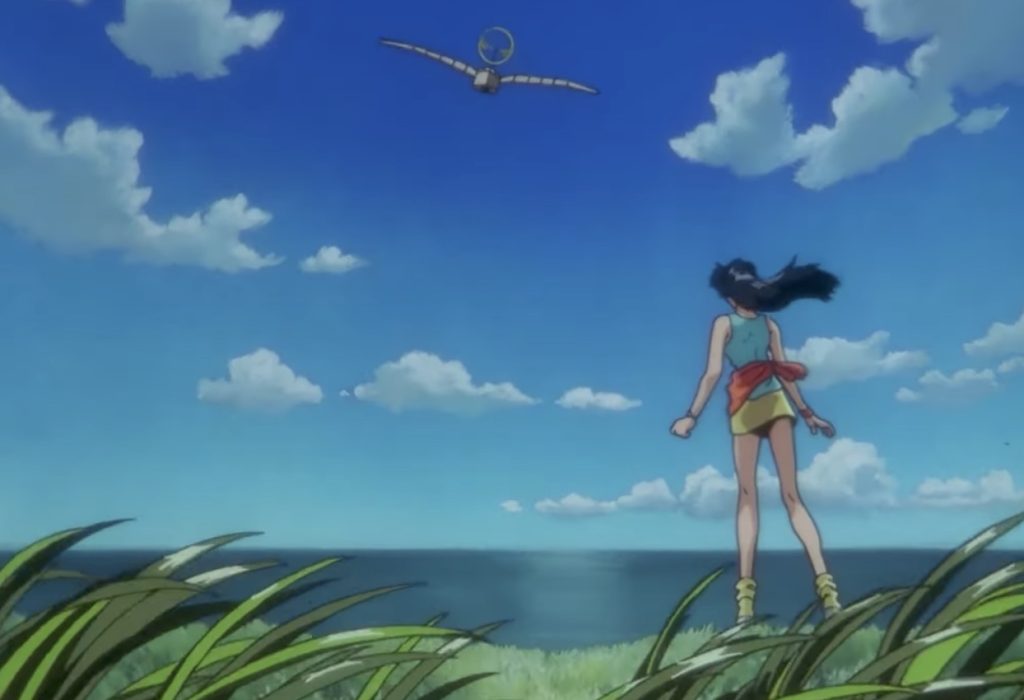
The resolution is so quiet. It’s lovely even if it’s not a perfect happily ever after. It’s a hopeful mirror of the opening, and that’s enough. Man, I love how pretty this show is.
Final Thoughts
It’s been several years since I’ve watched Macross Plus. It’s still one of my favorites just for the music alone. But, also for the way they handle trauma. It’s not clean, it’s three people dealing with a terrible past in isolation. While it doesn’t dive deeply into those themes, they’re there, influencing the characters and the plot. If you’re a fan of ‘90s anime and great music and somehow you haven’t seen Macross Plus, give it a watch. And H3 points out that it’s also widely viewed as one of the best mecha anime series of all time (which is his thing, along with the Top Gun stuff), so if that’s your thing too, you know what to do.
Leave a Reply