

For years, Frankenstein had been Del Toro’s dream project. It was perhaps one of the most- hyped releases of last winter. How could it not be? The director best known for Gothic visuals, taking on THE gothic horror story? The results are spectacular, but not the 100%-faithful adaptation of Mary Shelley’s story I was looking for. What I got instead was something beyond my wildest expectations.
- Directed by: Guillermo del Toro
- Written by : Guillermo del Toro. Mary Shelley
- Starring: Oscar Isaac. Jacob Elordi. Christoph Waltz
From a structural standpoint, there is much in common with the source material here. The narrative split between Victor and the Creature gives the audience a chance to understand both perspectives.
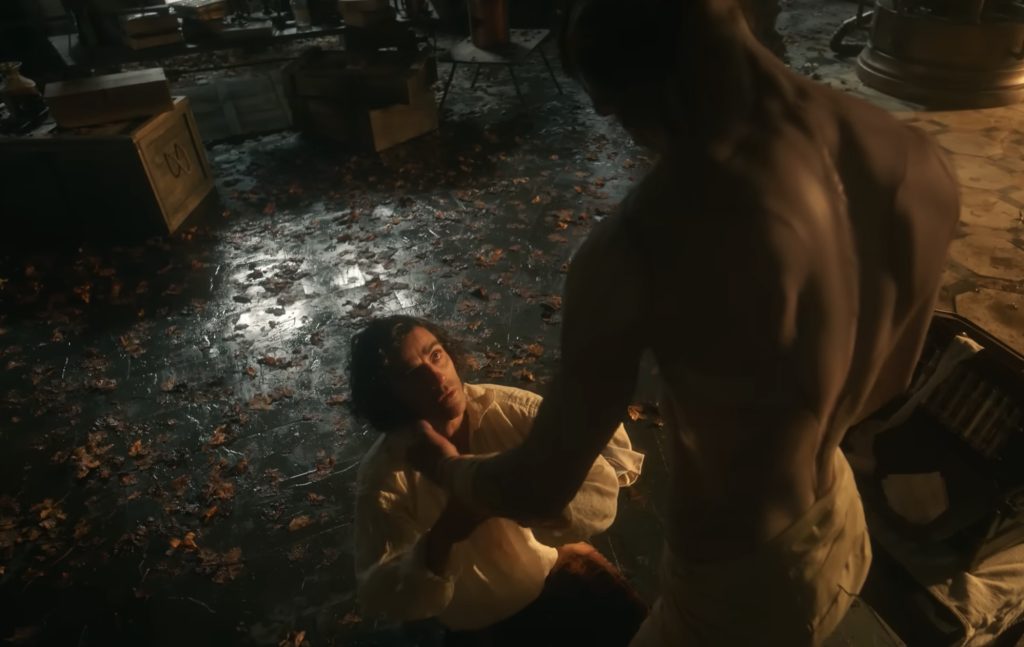
But these structural similarities mean little when compared to the key thematic differences. By now, we all know what Frankenstein is about, plot wise: Mad scientist hopes to conquer death through science. It’s a cautionary tale about unchecked progress and man’s hubris in the face of nature.
And there is some of that here. Del Toro takes care to spend time on the science. But this Frankenstein is about more than just dangerous science and the fear of death. Because Del Toro goes back to the source material, we jettison the “criminal brain” aspect of the Creature. This creature is violent only when provoked. In fact, violence is taught to him by his father, Victor.
Victor’s Side
This puts all subsequent violence and mayhem strictly on Victor’s shoulders. As the creator, he bears responsibility for his creation, which he is unable to accept. Like his father, when his creation fails to live up to his expectations, he becomes abusive. The most important line in the movie for Victor: “I never considered what would come after creation”. This crucial dialogue ties both themes together: the scientific hubris, and Victor’s staggering issues with his parents.
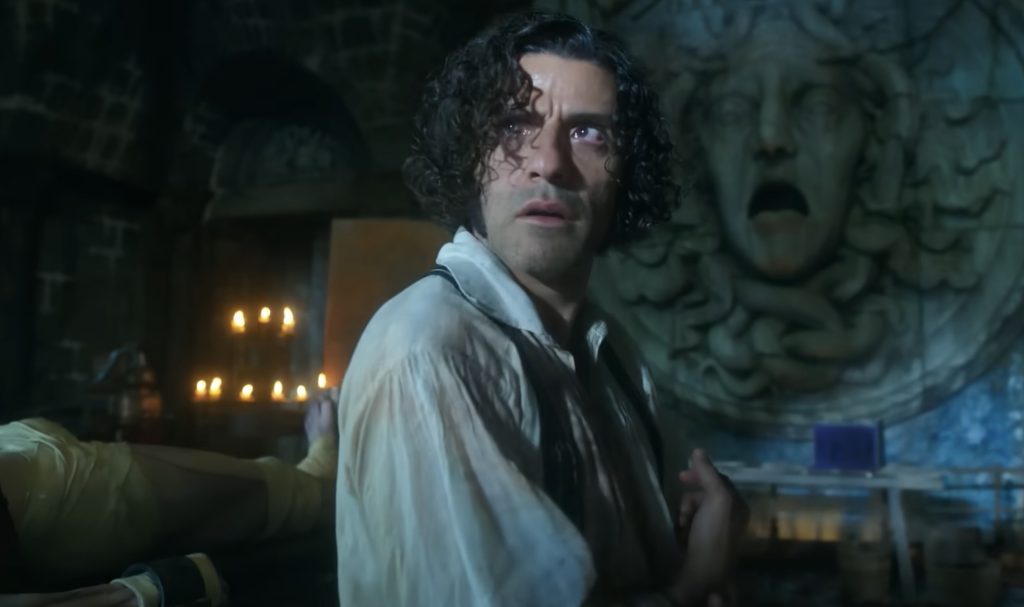
Victor is shown repeatedly to be the cause of all problems. He has deep issues he cannot move past and because of these, he will always inflict damage on those around him. He approaches the world with violence, anger, and certainty, determined to force his viewpoint on the world.
This is deeply contrasted by Elizabeth, Victor’s future sister-in-law. In one scene, everything becomes crystal clear. Elizabeth, upon meeting the Creature, approaches him with kindness and most importantly, a curiosity that Victor never displays. Since he made the Creature, he knows all about “it”, after all.
It is not the creature that is violent, it is Victor. Unable to face the reality of what he’s done, and who he truly is, he can only destroy.
The Creature’s Side
There is nothing in the Creature’s side of the story that exonerates Victor. Instead, we get a different look at how to overcome death and despair. Victor sought cold science, the Creature takes a different approach. Despite having none of Victor’ advantages—nobility, education—He seeks to better himself by educating and understanding. The Creature ends up with a spiritual family, one that believes in the Spirit of the Forest.
Like all things, the peace is not meant to last. The Creature begins to understand violence and its part in the cycle of the world. As dark and cynical as Victor’s story is, the Creature’s is hopeful and bright.
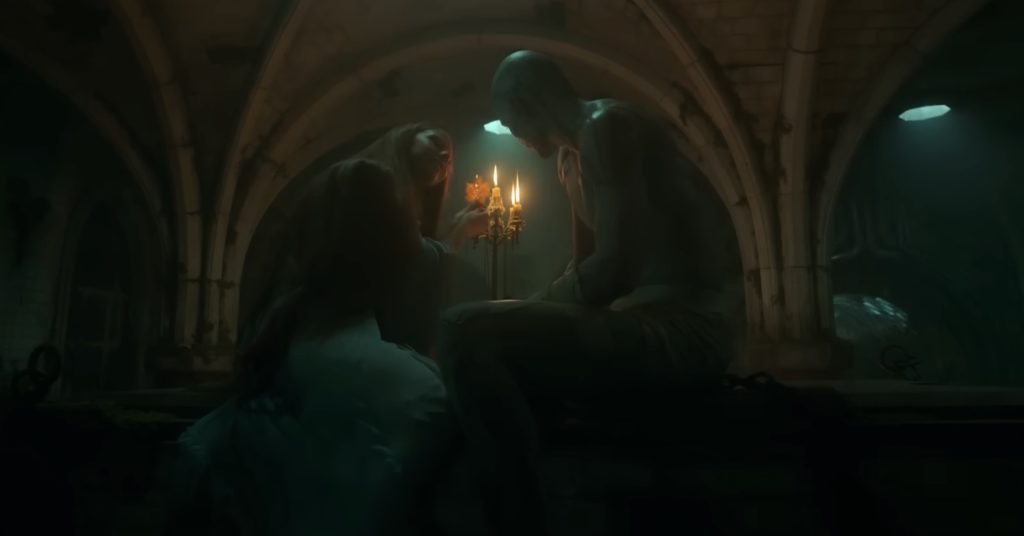
That may seem like a strange take, considering the amount of tragedy and loneliness that he endures. But that is life. The Creature’s story is one of life and renewal. His origin is horrific and monstrous. Even still, he can embrace the rising sun.
Frankenstein is a beautiful movie. It’s a different movie from Mary Shelley’s book. It retains most of the important themes. However, making Victor an overt villain does change the tone. Honestly, I approve. It feels relevant and fresh, touching on toxic masculinity and themes of men unable to let go of their idealized views on women. And yes, our favorite, generational trauma.
Let’s Talk About The Creature.
The success of this movie rests on the audience’s ability to connect with something previously presented as inhuman and monstrous. Recent adaptations have put much more emphasis on Frankenstein being the real monster, and Del Toro underlines that point, along with Oscar Isaac’s fantastic delivery
But all of it is for nothing if Jacob Elordi can’t communicate the depth of emotion under the Creature’s early silence. Well, he does. He’s brilliant. In both rage and forgiveness, he portrays a wealth of emotion, with body language and deep gazes. He deserves his Oscar nomination.

Final Thoughts
I’ve tried to be as unbiased as possible in addressing the themes and adherence to the source materials. But the truth is, I really loved this movie and writing this without gushing about every detail, reference, and stunning shot, has been a challenge. This is Del Toro at his best, in a visually lush, gothic tragedy. But it’s one that ends on a redemptive hopeful note. It’s a beautiful film that I know I will rewatch multiple times, just to soak in all the beauty and spectacle. And hey, H3 loved it too, so that’s something.
Del Toro’s Frankenstein is streaming on Netflix.
Leave a Reply